
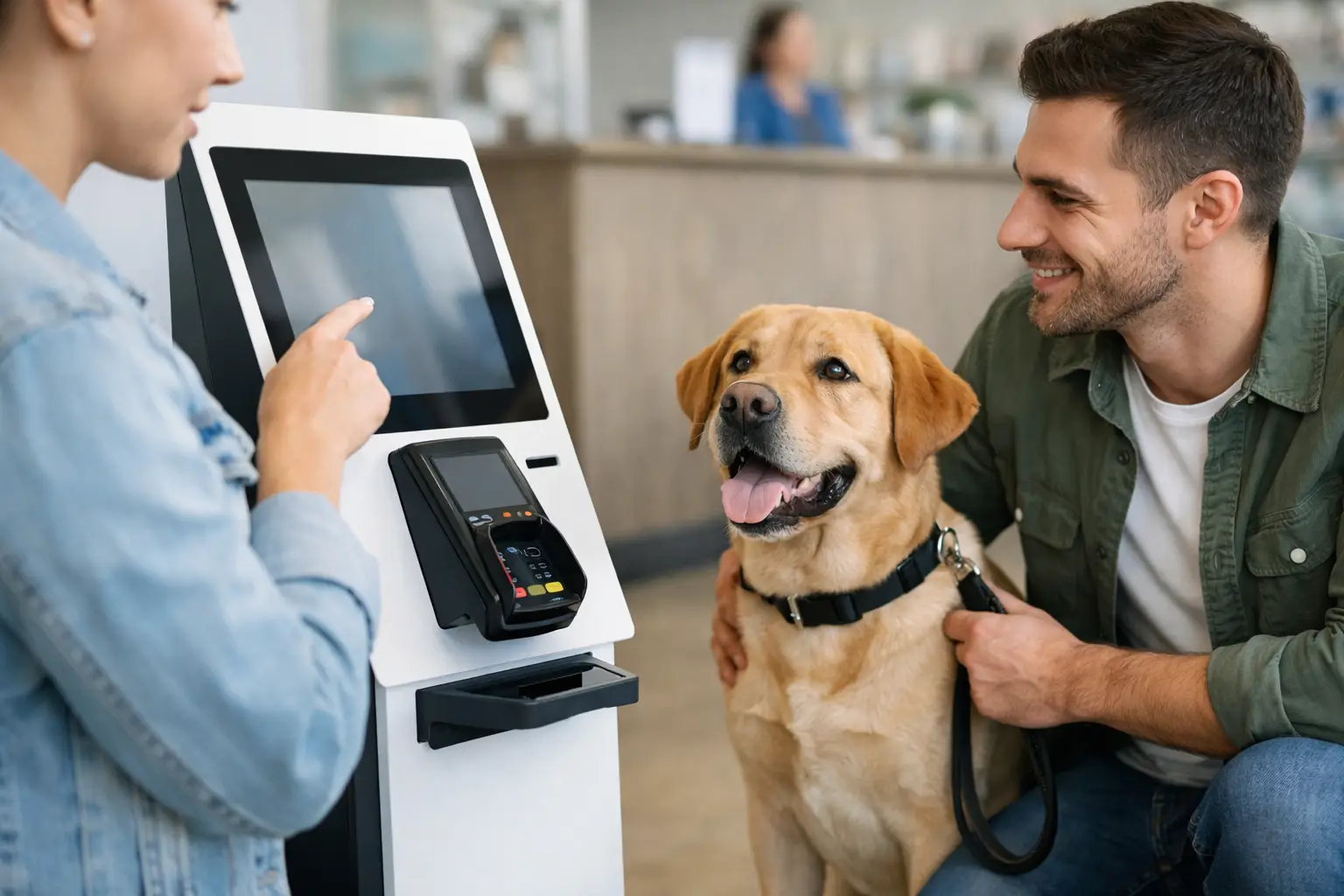
A beautiful self-service dog-wash space can lose its polish at the final moment: payment. A guest has towels in hand, a dog ready for care, and only a few seconds to understand what happens next. The best answers to kiosk payment questions are not technical scripts. They create confidence, protect the premium experience, and make the visit feel considered from start to finish.
For dog owners, the question is simple: can I pay easily and know exactly what I am receiving? For operators, it is more layered. The payment flow affects customer trust, daily oversight, support needs, and the wider impression of the location. A payment screen is not merely a transaction point. It is part of the service design.
The payment details guests want before they begin
Most customers do not want a long explanation at a kiosk. They want immediate clarity. The first screen should make the accepted payment methods easy to recognize, the price or price structure easy to read, and the next action obvious.
Contactless card payments are now an expected part of a polished self-service experience. Many guests also look for familiar digital wallet options, especially when they are out walking their dog and prefer not to carry a physical wallet. The right mix depends on the location, local payment habits, and the operator's payment provider. What matters most is that the accepted methods are displayed before a guest commits to the service.
Pricing deserves the same restraint. A guest should not have to guess whether the displayed amount covers a full wash session, a selected program, or a starting amount with optional additions. When the payment logic is clear, the kiosk feels more premium. When it is vague, even a beautifully designed environment can feel transactional.
Is the charge secure?
This question may be unspoken, but it sits behind every tap, card insertion, or wallet authorization. Customers look for the visual signals of a legitimate, maintained payment terminal: a clean screen, readable prompts, a trusted processor interface, and no confusing handoffs between screens.
Operators should work with qualified payment and technology partners and understand how transaction data, refunds, and terminal updates are managed. Exact security and compliance requirements vary by market and payment setup. The principle remains consistent: guests should never feel uncertain about where their payment is going or whether it has been accepted.
What happens if payment does not go through?
A declined card can happen for reasons unrelated to the kiosk. The experience should still remain calm and clear. A concise message should explain that the payment was not approved and invite the guest to try another method, rather than leave them wondering whether they have been charged.
The same applies to interrupted transactions. If a connection drops or a payment screen freezes, the guest needs a visible route to assistance. That can be a clearly displayed support contact, on-site team guidance where available, or a process that lets staff review the transaction. The goal is not to pretend disruptions never occur. It is to give people an elegant answer when they do.
Kiosk payment questions operators should ask first
For a B2B operator, payment is a strategic choice, not a final installation detail. It shapes the customer journey and the administrative rhythm behind it. Before selecting a setup, ask how the payment terminal connects to the kiosk software, how transactions are reconciled, and who owns each layer of support.
A direct agreement with a payment provider may offer flexibility, while an integrated option can reduce complexity. Neither approach is automatically superior. The right decision depends on the operator's existing systems, countries of operation, payment preferences, and the level of control the team needs.
The most useful questions are practical:
- Which cards and digital wallet methods can the terminal accept in the intended market?
- How are taxes, refunds, voids, and disputed charges handled?
- Can the operator see transaction status without waiting for a manual report?
- What happens when the terminal, network connection, or kiosk interface needs attention?
- Who provides support for the hardware, software, and payment account?
These questions are not glamorous, but they protect the glamorous part of the business: a reliable, five-star customer experience.
Think beyond the initial transaction
Payment operations continue long after a guest taps a card. Teams need a clear view of successful payments, failed attempts, refunds, and any exceptions requiring follow-up. A payment flow that looks refined to customers but creates confusion behind the scenes is not truly well designed.
Operators should also confirm what records are available for accounting and how often payouts occur. Payment processing fees, hardware requirements, connectivity needs, and service terms should be understood in advance. There is no credible universal cost model because providers, markets, transaction volumes, and contract structures differ. Clear documentation matters more than broad promises.
For international distribution projects, local expectations deserve particular attention. A payment method that feels standard in one country may be less relevant in another. Language choices, currency display, tax presentation, and regional consumer protections can all affect whether the kiosk feels intuitive. A premium concept should feel native to its setting, whether it is placed in Barcelona, elsewhere in Europe, or North America.
Design the checkout as part of the wash experience
The strongest kiosk interfaces use fewer words, not more. Guests should see the essential information in a natural order: select the service, confirm the amount, choose a payment method, receive confirmation, and understand what happens next. If a screen needs extensive explanation, the flow likely needs refinement.
Visual hierarchy matters. Large type, high contrast, clear buttons, and restrained branding help people act quickly. The interface should also anticipate the real context: a guest may be holding a leash, standing beside a wet dog, or using one hand. That does not mean reducing the experience to utility. It means making luxury feel effortless.
Receipts deserve a deliberate choice, too. Some guests value a digital receipt; others may want an on-screen confirmation only. The approach should align with local expectations and the operator's customer-service process. Whatever is offered, it should be explained in plain language before payment is completed.
Doggo Paradiso approaches self-service dog care as a design-led experience, where technology should support the ritual rather than distract from it. That perspective is useful for any operator: the payment moment should feel like a quiet confirmation that the space has been designed with care.
Answers that build trust at the point of payment
Good signage and concise on-screen guidance can prevent many common questions. State accepted payment methods near the kiosk. Make pricing visible before service selection. Provide a straightforward support path. Avoid dense legal language on the main payment screen, while ensuring the required terms are available where appropriate.
Do not overpromise. If a specific payment method is not supported, say so plainly. If refunds require staff review, make that process understandable. If an authorization may appear before a final charge is settled, explain it in language a guest can recognize. Precision is a form of hospitality.
For operators evaluating an automated dog-wash kiosk, payment should be reviewed alongside placement, connectivity, maintenance responsibilities, local regulations, and the intended guest journey. Ask for verified specifications and written confirmation of what the selected configuration supports. This is especially relevant when considering a cross-border rollout or meeting prospective technology partners at industry events such as SuperZoo 2026.
A guest may never remember the technical details of the payment terminal. They will remember whether the moment felt easy, transparent, and worthy of the setting. Make that final tap feel as considered as every other part of the experience.