
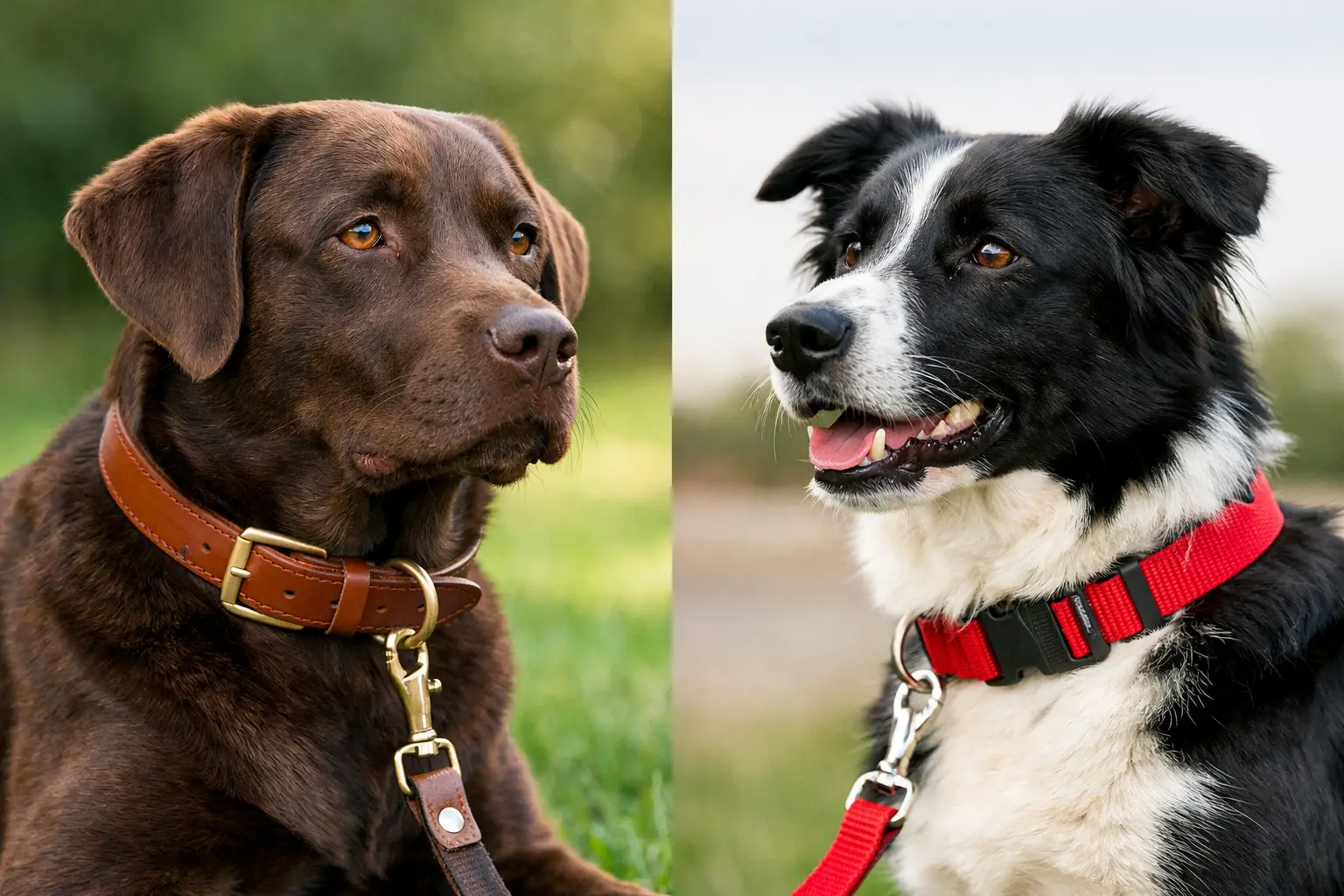
A collar is one of the few accessories your dog wears every day. It sits against the coat, appears in every walk and photograph, and needs to perform beautifully beyond the first week. The question of a leather dog collar versus nylon is therefore not simply about color or price point. It is about material, lifestyle, finish, and the small details that make a daily essential feel considered.
For design-led dog owners, leather and nylon each have a distinct place. One brings a tailored, enduring presence. The other offers technical ease and a confident, modern edge. The better choice depends on how your dog moves through the day.
Leather Dog Collar Versus Nylon: The Essential Difference
Leather is chosen for its natural hand feel and its ability to develop character over time. A well-made leather collar begins structured, then gradually softens with regular wear. The surface gains a subtle patina rather than looking worn out, provided it is cared for properly. For a dog whose routine includes city walks, polished cafés, weekend drives, and a well-curated wardrobe, leather has an unmistakable five-star appeal.
Nylon is a woven synthetic material with a different set of strengths. It is lightweight, available in vivid colors and graphic patterns, and generally handles wet conditions more easily than leather. A nylon collar can suit dogs with an active routine, especially when rain, beach air, or frequent outdoor adventures are part of the plan.
Neither material is universally superior. The decision is more precise: should your dog’s primary collar feel like a classic leather accessory, or should it offer the practical flexibility of performance fabric?
The Case for Leather: Softness, Structure, and Style
A premium leather collar gives an outfit a finished look. Its appeal lies in restraint. Deep brown, warm cognac, black, cream, or a carefully selected seasonal shade can complement a dog’s coat without competing with it. Hardware matters here as much as the hide itself. Clean metal fittings, balanced proportions, and neatly finished edges turn a functional piece into an accessory with presence.
Over time, leather can become increasingly comfortable because it tends to ease and shape with use. That does not mean every leather collar feels soft on day one. Stiff leather, rough cut edges, heavy decorative elements, or poorly placed stitching can feel cumbersome. Look for a collar with a smooth lining or carefully burnished edges, especially for dogs with shorter coats where the collar sits more directly against the skin.
Leather also asks for a little intention. It should be kept dry when possible and allowed to air dry naturally if caught in rain. Repeated soaking, pool water, and long exposure to damp conditions can change the finish and reduce the material’s lifespan. Occasional cleaning with a soft, lightly damp cloth and a leather-appropriate conditioning routine can help preserve suppleness.
This is not high maintenance for the right owner. It is the same kind of care given to a favorite leather bag or pair of shoes. For many, that ritual is part of the pleasure.
When Leather Makes the Most Sense
Leather is especially suited to dogs whose everyday life is mostly urban and dry. It is a strong choice for a refined daily walk collar, a special-occasion look, or a coordinated set with a leather leash and carrier. It also works beautifully for owners who prefer fewer accessories of higher visual quality.
It may be less ideal as the only collar for a dog who routinely swims, rolls through wet grass, or spends long days in persistent rain. In those cases, leather can remain the elegant option for city life while nylon takes over for wetter plans.
The Case for Nylon: Easygoing Performance With Color
Nylon has a cleaner, more athletic personality. Its woven construction makes it light on the neck, and its color options offer room for expression. Think saturated red against a sleek black coat, cobalt blue with silver hardware, or a bold striped webbing that brings energy to a simple harness or raincoat.
For many dogs, nylon is the uncomplicated choice for weather-variable days. It does not require the same conditioning routine as leather, and it is generally easier to rinse and dry after an unexpected downpour or muddy park route. That convenience can be valuable when a collar is part of a more active rotation.
Still, not all nylon is equal. Thin webbing can twist. Rough edges can abrade the coat. Printed patterns may fade, while low-quality hardware can scratch, discolor, or lose its secure feel. A premium nylon collar should have dense, smooth webbing, thoughtfully finished seams, and hardware that feels proportional to the dog rather than oversized or ornamental.
Nylon can also retain odor if it is repeatedly exposed to moisture and not cleaned thoroughly. Regular washing according to the maker’s care guidance, followed by complete drying, keeps it looking more polished. A nylon collar is practical, but it should never be treated as disposable.
When Nylon Makes the Most Sense
Nylon is a natural choice for a dog with an energetic outdoor routine or for owners who want one collar that is ready for changing weather. It also gives seasonal fashion more freedom. Bright summer colors, graphic patterns, and sport-inspired combinations are easier to introduce in nylon without losing a sophisticated finish.
For travel, nylon’s lighter weight and simpler care can be appealing. It is also a sensible second collar to keep ready for rainy walks, grooming days, or any occasion when your leather piece deserves a rest.
Comfort Is About Fit, Not Material Alone
Material influences comfort, but fit decides it. A beautifully crafted leather collar that is too tight is not luxurious. A lightweight nylon collar that slips over the head is not secure. The ideal fit allows room to comfortably place two fingers between the collar and your dog’s neck while remaining snug enough that it cannot easily slide off.
Pay attention to width as well. A very narrow collar can look delicate, but it may not suit every dog’s proportions or walking habits. A wider collar distributes visual weight more evenly and can create a stronger, more tailored silhouette. The best width should suit your dog’s neck, coat, and overall build rather than follow a trend blindly.
Check the collar regularly, particularly for growing dogs or dogs whose coat changes with the season. Examine the buckle, D-ring, stitching, webbing, and any adjustment holes. A premium accessory should age gracefully, but every daily-wear piece benefits from inspection.
A Better Answer Than Choosing Just One
The most polished approach is often a small collar wardrobe. A leather collar can be the signature piece: composed, versatile, and suited to the everyday moments that call for elevated style. A nylon collar can be the functional counterpart, ready for wet sidewalks, spontaneous outings, and high-energy weekends.
This rotation also gives each collar time to air out and stay in better condition. More importantly, it lets your dog’s accessories match the occasion without making style feel precious. Doggo Paradiso sees this balance as part of modern dog living: excellent design should be enjoyed, not kept aside.
How to Choose With Confidence
Start with your dog’s actual week, not an imagined one. If most walks happen on dry city streets and you want an accessory that looks increasingly distinctive with age, choose leather. If wet weather, outdoor activity, and easy cleaning shape the routine, nylon may be the smarter primary collar.
Then consider the aesthetic you want to return to every morning. Leather feels timeless, composed, and quietly luxurious. Nylon feels fresh, graphic, and capable. Both can meet a high standard when materials, finishing, and fit are treated with care.
The finest collar is not the one that merely matches a leash. It is the one that feels right on your dog, holds up to the rhythm of your shared life, and makes even an ordinary walk feel deliberately well dressed.