
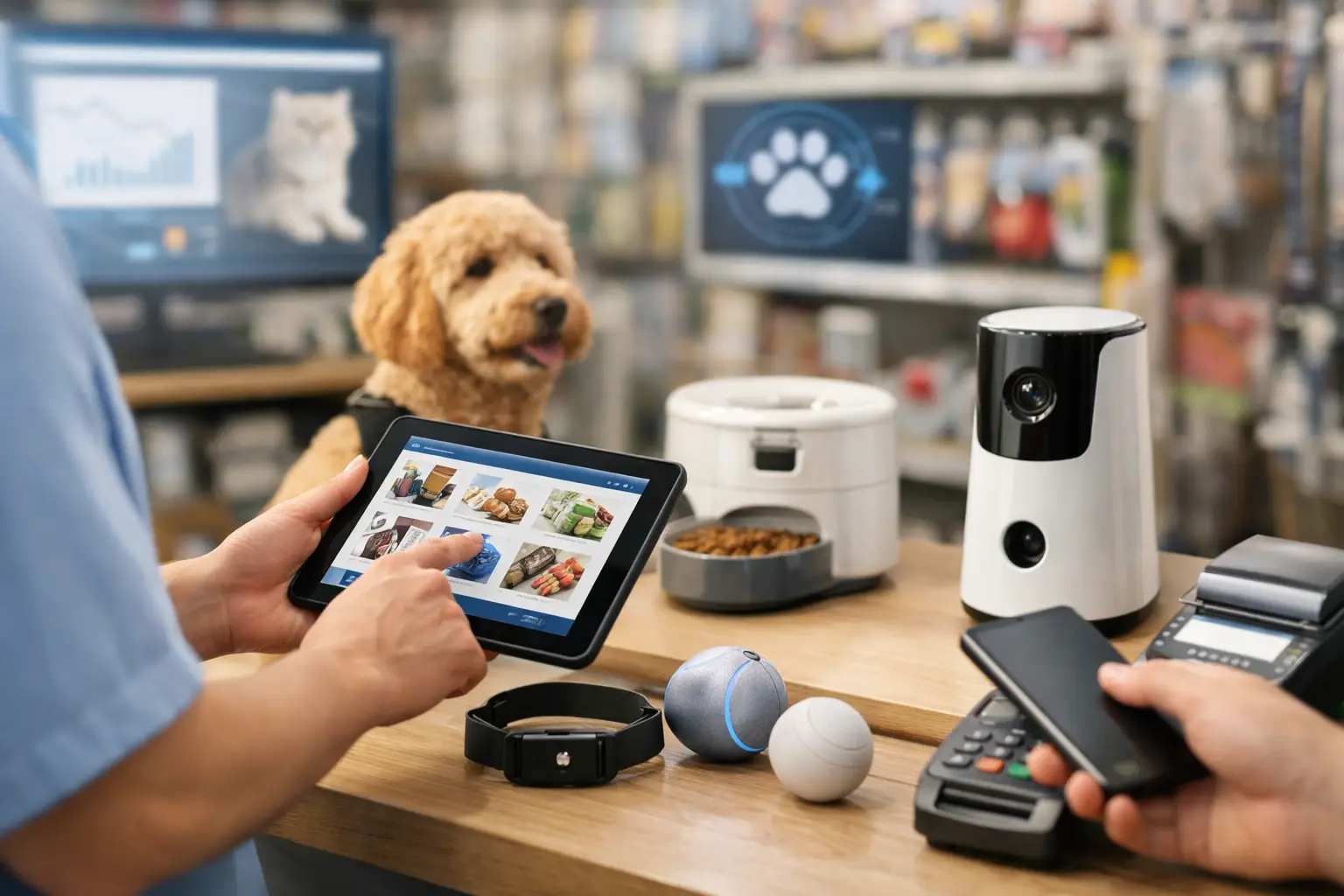
A premium dog business is no longer defined only by what sits on the shelf. It is defined by what happens around the purchase: the ease of booking, the confidence of using a service, the quality of the environment, and the feeling a customer takes home. That is why SuperZoo technology trends matter well beyond the trade-show floor. They reveal how design, service, and operational intelligence are becoming part of the modern dog-lifestyle experience.
For discerning dog owners, technology should not feel like a gadget competing for attention. It should make a beautiful space more useful. For operators and distributors, it should support a clearer service model without creating unnecessary complexity behind the scenes. The strongest concepts bring both perspectives together.
SuperZoo Technology Trends Worth Watching
The most compelling technology at a pet retail event is rarely the loudest. It is the technology that solves a real friction point while protecting the premium character of the customer experience. Across grooming, retail, and service environments, several directions deserve close attention.
Connected grooming moves into the retail experience
Self-service dog washing is evolving from a simple utility into a considered retail amenity. In the right location, an automated dog-wash kiosk can give a dog owner a practical reason to return, while creating a more complete destination for grooming, wellness, accessories, and seasonal style.
The difference lies in the execution. A premium operator should assess the entire journey, from access and clear instructions to cleaning protocols, drainage requirements, service support, and the finish of the surrounding space. A kiosk may be highly visible, but it should still belong in its setting. Materials, lighting, signage, and nearby product displays all shape whether the experience feels considered or merely functional.
For B2B buyers, technical conversations need to be specific. Ask for verified information on wash-cycle timing, water and energy requirements, installation conditions, maintenance procedures, and built-in safety features. Those details determine whether the model fits a boutique, a grooming concept, a hospitality venue, or a larger retail footprint. General promises are not a substitute for site-specific planning.
Retail technology becomes quieter and more useful
For years, retail innovation was often equated with more screens. The better direction is more selective. A digital touchpoint earns its place when it helps a customer choose the correct service, understand a product, access care information, or move through a space with less hesitation.
Premium dog retail does not need to resemble an electronics store. It needs technology that supports a composed, high-touch atmosphere. A digital display can introduce a new collection, explain the use of a grooming service, or feature a limited event without overwhelming the visual identity of the store. A booking tool can reduce back-and-forth for staff while making the customer feel expected rather than processed.
This is particularly relevant for fashion-led dog brands. A seasonal collection has emotion, color, and texture. Technology should frame those elements, not flatten them into a transaction. The objective is an editorial retail experience with practical intelligence underneath it.
Data shifts from surveillance to service
Operators have access to more signals than ever: appointment patterns, product preferences, service demand, repeat visits, and location-specific behavior. The opportunity is not to collect everything. It is to use a small number of meaningful insights well.
A store may learn that certain grooming-service windows are more popular, that a seasonal collection creates interest around a particular event, or that customers commonly pair a wash visit with a specific accessory category. These patterns can inform staffing, merchandising, and communication. They can also help an operator decide whether a new service deserves more space or a different placement.
The trade-off is trust. Premium customers notice when personalization is useful and when it feels intrusive. Data practices should be clear, restrained, and connected to a genuine benefit. A thoughtful reminder, relevant service availability, or a well-timed event invitation can feel attentive. Excessive messages and irrelevant offers weaken the relationship.
Artificial intelligence needs a clear role
Artificial intelligence will remain part of the conversation at SuperZoo, especially in customer service, demand forecasting, product content, and business administration. Yet the strongest use cases are not theatrical. They are practical.
For an operator, AI may help organize frequently asked questions, identify recurring service issues in customer feedback, or assist with planning inventory around seasonal demand. For a customer-facing brand, it can support clearer product descriptions and faster responses to basic inquiries. It should not replace a skilled recommendation on fit, style, or the needs of a particular dog.
Luxury is personal. A dog owner choosing a carrier, collar, or grooming service often wants confidence, not an automated script. AI can prepare the team and reduce repetitive work. The human expert should remain visible at the point where taste, reassurance, and judgment matter most.
What B2B Operators Should Evaluate Before Investing
Technology should be evaluated as an operating model, not a showroom feature. An automated service can create a stronger destination, but only if the location, team, maintenance plan, and customer behavior support it.
Before committing to a dog-wash kiosk or another connected service platform, operators should clarify five areas:
- Site readiness, including plumbing, drainage, electrical requirements, access, ventilation, and the practical flow of dogs and owners through the space.
- Verified operating specifications, including service timing, consumable requirements, cleaning routines, maintenance responsibilities, and safety systems.
- Customer guidance, from signage and first-use instructions to support when a visitor needs help during the experience.
- Commercial fit, including how the service sits beside grooming, retail, memberships, events, or hospitality rather than existing as an isolated feature.
- Supplier support, including training, warranty terms, parts availability, technical escalation, and what is included after installation.
These questions are not obstacles. They are the foundation of a polished launch. The most successful service concepts are usually the ones that look effortless because the operational details were handled early.
The location still sets the standard
A smart kiosk can add value in a premium retail setting, but it cannot compensate for a poor location strategy. Foot traffic, parking or arrival convenience, neighborhood lifestyle, local grooming demand, and the proximity of complementary businesses all influence the outcome.
The same applies to layout. A dog-wash area needs sufficient room for owners and dogs to enter, move, dry off, and exit with dignity. Retail displays should remain protected from splash zones and congestion. Staff should be able to oversee the service when needed without abandoning the rest of the store.
For international partners, the details may vary by market. Local building rules, utilities, customer habits, and service expectations can change the ideal approach. A concept that works beautifully in one city may need a different footprint or operating process in another. Adaptation is not a compromise to the brand. It is good design.
From Trade Show Interest to a Better Experience
SuperZoo is most valuable when it leads to sharper questions. Rather than asking which technology is newest, ask which one gives a dog owner a more elegant, reliable experience and gives the operator a model they can genuinely support.
At SuperZoo 2026, Doggo Paradiso will present its automatic dog-wash kiosk at Booth 13-17 for operators and distributors looking at design-led service concepts for their own locations. The conversation should begin with verified specifications and the realities of each site, then move toward the customer experience that location can credibly deliver.
The next era of dog retail will not belong to businesses that add technology for its own sake. It will belong to those that use it with restraint, taste, and a clear understanding of what their customers value: more time together, better service, and spaces worthy of the dogs at the center of their lives.