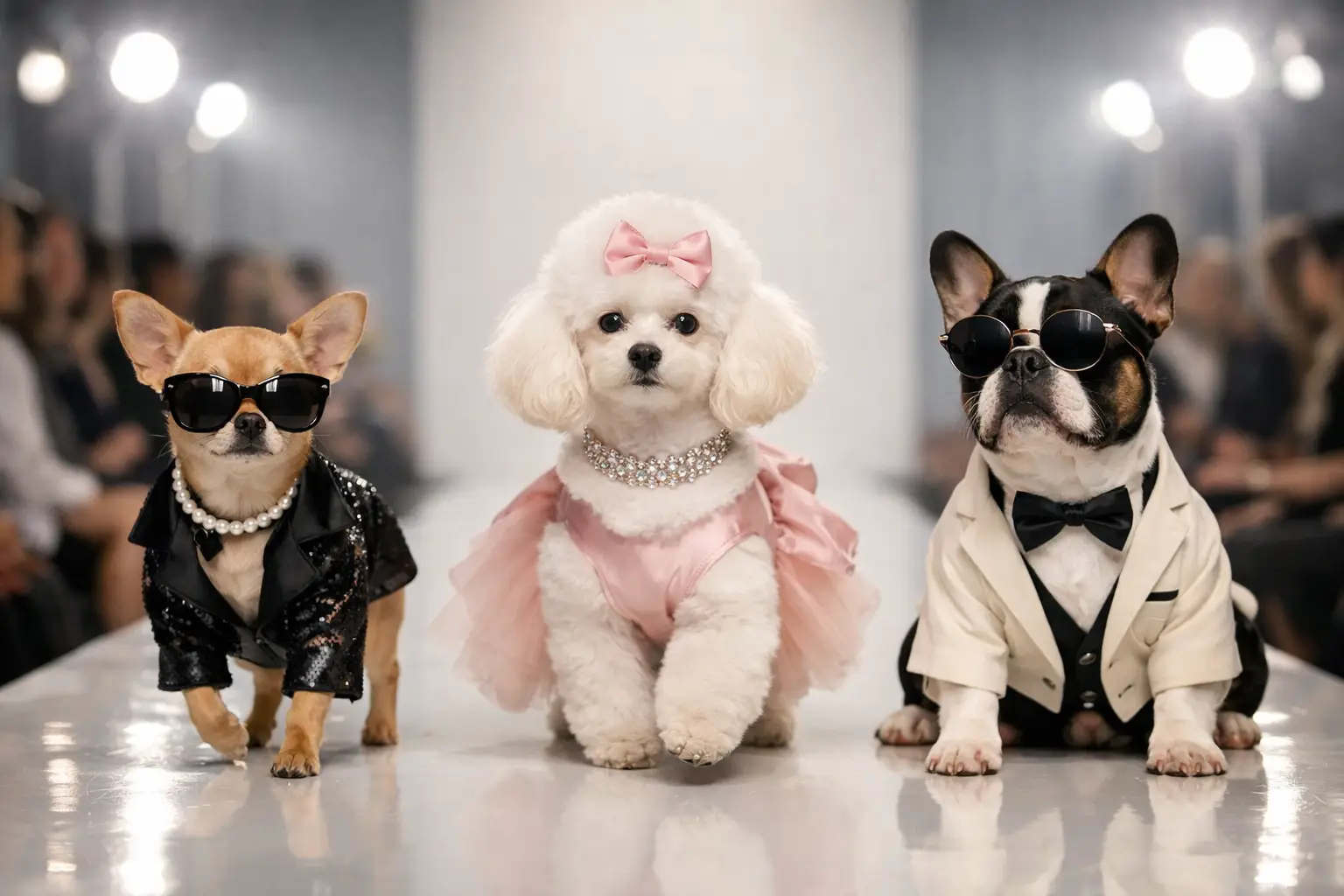
The difference between a charming dog fashion show look and a forgettable one is rarely the price tag. It is the point of view. The dogs that truly stand out are not drowning in embellishment or dressed like props. They look finished, confident, and unmistakably themselves. That is what turns a costume into style.
For owners with a strong eye, this matters. A well-styled dog belongs in the same visual world as the home you design, the pieces you wear, and the places you choose to spend time. A fashion moment should feel intentional. At its best, a dog fashion show is not novelty. It is curation.
What makes a dog fashion show look elegant
Elegance starts with restraint. The strongest looks usually have one clear idea and follow it with discipline. That might mean a sharply tailored denim jacket, a sculptural cape in a rich neutral, or a refined collar paired with a beautifully cut harness. The silhouette should read instantly.
Too many competing details dilute the effect. Sequins, oversized bows, loud prints, and clashing textures can photograph well in isolation but lose impact on a moving dog. A cleaner composition almost always looks more expensive. It also lets your dog's natural presence do the work.
Fit matters more than decoration. If a piece twists, rides up, or restricts movement, the audience notices, even if they cannot name the issue. True luxury is visible in proportion. The neckline sits correctly. The chest is comfortable. The hemline does not interrupt the gait. The dog appears relaxed, which is the strongest styling note of all.
Dog fashion show dressing starts with the dog's character
Some dogs command attention with drama. Others are better served by understatement. A successful dog fashion show look begins by reading the dog in front of you, not by forcing a trend onto them.
A compact breed with a lively step can carry a playful, fashion-forward shape, especially if the fabric has structure. A larger dog with a calm, stately presence often looks best in cleaner lines and richer materials. Coats, capes, tailored shirting, and polished accessories can feel remarkable on a dog with natural poise. On a more energetic dog, the same outfit may feel too formal unless it allows ease and movement.
Color deserves the same attention. Black dogs often look extraordinary in ivory, camel, denim, or metallic accents. Cream and light-coated dogs can support deeper tones like navy, forest, oxblood, or charcoal. Dogs with patterned coats usually benefit from solid fabrics that frame the coat rather than compete with it.
This is where styling becomes editorial rather than decorative. You are not just dressing a dog. You are building a visual identity.
The fabrics and finishes that read as luxury
Material choice changes everything. In person and on camera, texture is one of the quickest ways to separate a premium look from a gimmick. Denim with weight and shape, crisp cotton, brushed wool blends, fine knits, soft faux shearling, and smooth technical fabrics all carry presence. They hold their line and elevate the silhouette.
Shiny synthetic fabrics can be useful in small doses, especially for evening-inspired looks, but they can also look theatrical very quickly. The same goes for heavy embellishment. If you want sparkle, use it with precision. A jeweled fastening or subtle metallic thread often delivers more sophistication than all-over shine.
Hardware also counts. Buckles, rings, snaps, and closures should look intentional, not utilitarian. Matte gold, brushed silver, polished enamel, and high-quality leather trims bring quiet authority. They signal design consciousness without asking for applause.
A premium dog wardrobe works best when each element feels considered. Even one exceptional piece can carry a look if the finish is strong enough. This is why well-designed basics often outperform louder, trend-led pieces in the ring.
How to style for movement, not just the photo
A dog fashion show is not a still-life exercise. The look has to survive motion. That changes what works.
Anything that slips over the eyes, bunches at the shoulders, or causes a dog to shorten its stride will undermine the entire presentation. The audience may remember the outfit, but not for the right reason. Style should support presence, not compete with it.
Think about how the garment behaves from every angle. A jacket should keep a clean line while walking. A cape should drape rather than flap uncontrollably. A harness should feel sculptural, not bulky. Accessories should add polish without becoming the focal point through movement alone.
This is one reason tailored simplicity often wins. It photographs beautifully, but it also reads well in motion. There is confidence in a look that does not need constant adjustment.
Building a cohesive dog fashion show look
The best looks are edited. They have a lead piece, a supporting piece, and then a stop point. If the jacket is the statement, let the collar and leash stay refined. If the accessory is the standout, keep the clothing clean. Every added element should earn its place.
Owners sometimes over-style because they want the effort to be visible. In practice, confidence is more compelling than effort. A beautifully cut denim piece paired with an elegant lead and one distinctive detail can feel far more elevated than an outfit overloaded with visual signals.
It also helps to think about context. A daytime event favors fresher textures, relaxed polish, and clearer lines. An evening setting can support deeper tones, richer finishes, and a more dramatic silhouette. Outdoor venues require realism. Wind, grass, pavement, and temperature all affect what will actually look composed.
For this reason, a five-star dog fashion show wardrobe is not just about beauty. It is about judgment.
The owner's role in the presentation
Even when the focus is on the dog, the handler shapes the entire impression. Your pace, posture, and styling choices become part of the visual story. If your dog is dressed in a highly considered look, your own presentation should feel aligned.
That does not mean matching literally. It means staying within the same aesthetic language. If your dog wears minimalist tailoring, your own look should feel clean and architectural. If the dog's outfit leans romantic or couture-inspired, a softer, more polished wardrobe choice from you can reinforce the mood.
Leads and carriers deserve the same scrutiny. They are part of the frame. A beautiful garment paired with an ordinary accessory loses some of its impact. This is where premium design earns its place. Refined details create continuity.
Brands with a clear visual identity understand this intuitively. Doggo Paradiso, for example, approaches dog style as part of a broader luxury lifestyle rather than a novelty category. That point of view is exactly what gives event dressing more depth.
When statement fashion works - and when it does not
There is room for drama in a dog fashion show. In fact, a memorable statement piece can be brilliant. But drama only works when it is controlled.
Volume can be striking on a calm dog with natural ease. It can look chaotic on a dog that prefers speed and freedom. Bold color can be exceptional if it flatters the coat and the event setting. It can feel forced if it overwhelms the dog's appearance. Headpieces, layered tulle, and highly conceptual looks may succeed in editorial shoots yet falter in live presentations.
The trade-off is simple. The more theatrical the concept, the more disciplined the execution has to be. If comfort or clarity suffers, the look stops feeling luxurious. It starts feeling costume-driven.
That line matters, especially for owners who appreciate fashion as design rather than spectacle. The goal is not to disguise the dog. The goal is to elevate what is already there.
Why dog fashion has moved beyond novelty
Luxury dog fashion now sits closer to lifestyle branding than to seasonal gimmicks. Owners in cities like New York, Los Angeles, Miami, and Chicago are not dressing their dogs for laughs. They are expressing taste, identity, and a shared standard of living. The event scene reflects that shift.
A modern dog fashion show can feel more like a curated social experience than a casual pet activity. The strongest presentations draw from runway logic, hospitality, and brand storytelling. The dog is central, but the broader atmosphere matters too - the setting, the pacing, the photography, the guest list, the details.
That is why better dog fashion is becoming more refined, not more excessive. It is moving toward cleaner lines, better textiles, stronger construction, and more thoughtful styling. In other words, it is growing up.
For discerning owners, that is the real appeal. Not attention for its own sake. Not costume theater. A sharper expression of taste, scaled perfectly for a dog.
If you are choosing a look for a future event, start with one question: does this feel like elevated style, or simply extra effort? The right answer is usually the quieter one, and it is almost always the one people remember.