
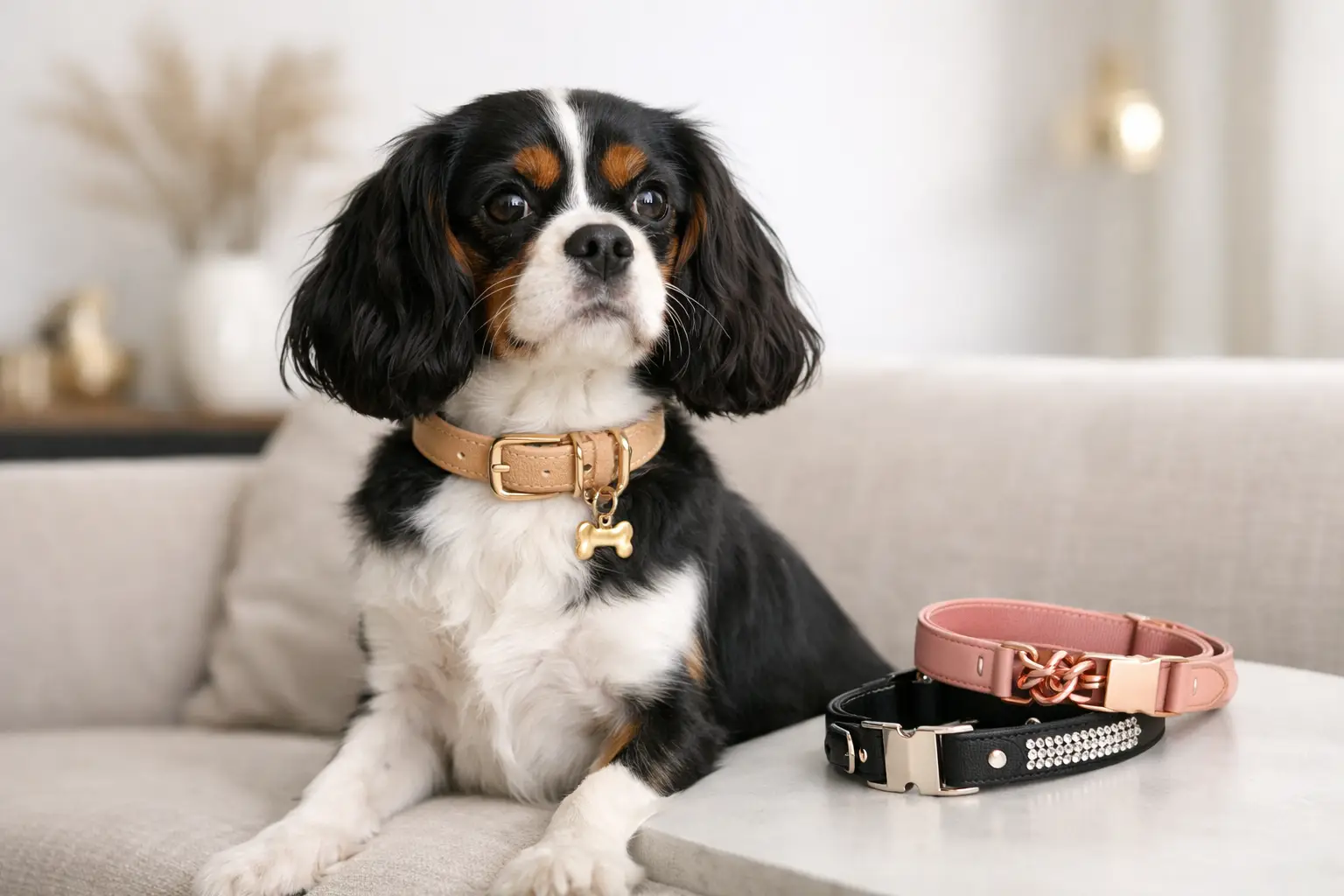
A collar is the one accessory your dog wears beyond the front door, through the café terrace, the hotel lobby, and the familiar streets of the neighborhood. The best fashion forward dog collars do more than add color. They bring proportion, material, and personality into focus while remaining comfortable enough for real life.
For design-led owners, the choice is not between style and function. It is about selecting an object that feels considered from every angle: the leather, the closure, the hardware, and the way it sits against the coat. A great collar should look intentional in a photograph, but more importantly, it should feel right on the daily walk.
What Makes a Dog Collar Fashion Forward?
Fashion-forward does not mean loud. A collar earns that description when its design has a clear point of view. It may be a sculptural buckle, an unexpected yet sophisticated color, a beautifully finished edge, or a texture that gives a simple silhouette more presence.
The most successful pieces tend to balance one focal detail with restraint elsewhere. A wide, richly toned leather collar with polished brass hardware already has enough visual impact. Adding contrast stitching, oversized charms, and a printed leash can turn a refined look into visual noise. The same principle applies to your own wardrobe: let one exceptional element lead.
Seasonality also matters. Deep oxblood, espresso, forest green, and warm camel feel especially composed against autumn and winter coats. In brighter months, stone, soft blue, cream, and sun-washed coral offer a lighter expression without losing polish. The right color should complement your dog's coat rather than compete with it.
The Best Fashion Forward Dog Collars Start With Material
Material determines how a collar looks, ages, and feels. It is the foundation of the entire design.
Leather for a tailored finish
Full-grain leather remains a defining choice for a luxury collar. It has depth, develops character over time, and can be finished in colors that feel more nuanced than standard nylon. Smooth leather reads clean and architectural. Pebbled leather offers a softer visual texture and can be more forgiving of everyday marks.
Leather does ask for attention. Repeated soaking, saltwater exposure, and storing it while damp can affect its finish and shape. If your dog spends much of the week near water or in muddy parks, consider reserving your finest leather collar for city walks, travel, and occasions where a more polished look matters.
Woven webbing for modern energy
Premium webbing can look exceptionally sharp when the weave is dense, the colors are intentional, and the hardware is substantial. It suits a graphic, contemporary wardrobe and offers flexibility for dogs with active routines. The distinction lies in the details: clean stitching, a collar that holds its shape, and a finish that does not feel overly sporty.
A woven collar can be particularly effective on dogs with dense or dark coats, where a saturated stripe or refined pattern brings definition around the neck. Choose a design with enough contrast to be visible, but avoid a pattern so busy that it overwhelms the dog.
Textile and velvet for special moments
Textile collars, including velvet and patterned fabric styles, offer a softer, more editorial look. They can transform a simple harness-and-leash combination into something that feels like a complete outfit. These are often best treated as occasion pieces, especially in pale shades or delicate textures.
The trade-off is practical. Fabric can show moisture, dust, and friction more quickly than leather or webbing. It is worth choosing when the visual effect is the priority, but it may not be the only collar in a well-curated rotation.
Fit Is the Most Elegant Detail
No material or color can compensate for poor fit. A collar that slips too low on the neck, twists toward the throat, or leaves excess strap floating at the side never looks luxurious. It also distracts from the dog's natural movement.
Measure at the point where your dog normally wears a collar, then check the adjustment range rather than relying on a size label alone. You should be able to place two fingers between the collar and the neck, though very small dogs and dogs with fine coats may need a more precise fit. Recheck it as coats change with grooming, seasonal growth, or age.
Width changes the entire silhouette. Narrow collars can look delicate and precise on small dogs or long, elegant necks. A medium or wider band often gives a more balanced line on larger dogs and can make a statement without relying on excessive decoration. For short-necked breeds, an overly wide collar may look heavy. Proportion is the quiet marker of good taste.
Hardware Should Feel Considered, Not Decorative
Hardware is where many collars either become elevated or lose their refinement. Look for closures and rings that feel solid, sit flat, and suit the color story of the collar. Warm gold-toned hardware pairs naturally with cognac, cream, red, and olive. Silver-toned hardware brings a cooler, more minimal feeling to black, navy, gray, and icy pastels.
A buckle collar often has a classic, tailored presence. Quick-release closures can offer convenience and a clean modern profile, provided they are designed with care and used appropriately for your dog's size and walking setup. Whichever closure you choose, inspect it regularly for wear, movement, and secure attachment.
Avoid treating the ID tag as an afterthought. A simple engraved tag in a matching metal can complete the look. Too many dangling pieces, however, can create noise, catch on the collar, and distract from an otherwise strong design.
Build a Collar Wardrobe, Not a Single Look
One excellent collar is a strong start. Two or three thoughtfully chosen options give you more range without turning the accessory drawer into clutter. Think of them as wardrobe essentials: a dark neutral for daily wear, a lighter or more expressive color for weekends and travel, and one special texture for occasions.
A black or espresso leather collar is naturally versatile with a polished leash and a structured carrier. A sand, blush, or soft sage collar can make a striking counterpoint to a dark coat. For a dog with a pale cream or silver coat, darker jewel tones create definition, while rich tan and warm red can add depth without looking severe.
Matching every accessory exactly is not always necessary. A collar and leash in related tones can feel more modern than a perfect set. Consider a chocolate leather collar with a caramel leash, or navy webbing with brushed silver hardware and a charcoal carrier. The palette should feel intentional, not uniform.
Doggo Paradiso approaches designer dog fashion with this same editorial instinct: accessories should complement a lifestyle, not merely decorate a pet. The strongest choices feel personal, composed, and easy to wear.
Styling by Coat Color and Personality
Coat color offers a useful starting point, but personality should make the final decision. A confident, expressive dog may carry a saturated cobalt or red collar beautifully. A more understated look can be just as memorable in slate, taupe, or deep green.
Black coats create the ideal backdrop for almost every color, though black-on-black works best when texture or hardware creates contrast. White and cream coats look elegant with navy, burgundy, emerald, and warm tan. Red or golden coats often shine beside blue, teal, forest green, and chocolate. Gray coats pair especially well with dusty rose, plum, rich navy, and brushed metal details.
Do not overlook the line of the dog's face and ears. A collar is seen close to the head, so it should support the dog's natural coloring and expression. When in doubt, hold a few material swatches near the neck in daylight. The best option usually becomes obvious quickly.
Care That Preserves the Finish
Premium accessories reward simple, regular care. Wipe hardware after wet walks, brush away dried dirt before it settles into seams, and allow collars to air dry fully away from direct heat. Leather benefits from products made for leather, used sparingly and according to the maker's instructions. Fabric and webbing collars should be cleaned only as their care guidance allows.
Rotate collars rather than wearing one piece continuously. This helps preserve shape and finish, while giving you the freedom to style for the setting. Before each outing, take a moment to check the buckle, ring, stitching, and adjustment point. Beautiful design should always be paired with thoughtful use.
Choose the collar that makes your dog look most like themselves, only more polished. That is the kind of style that remains memorable long after the walk is over.