
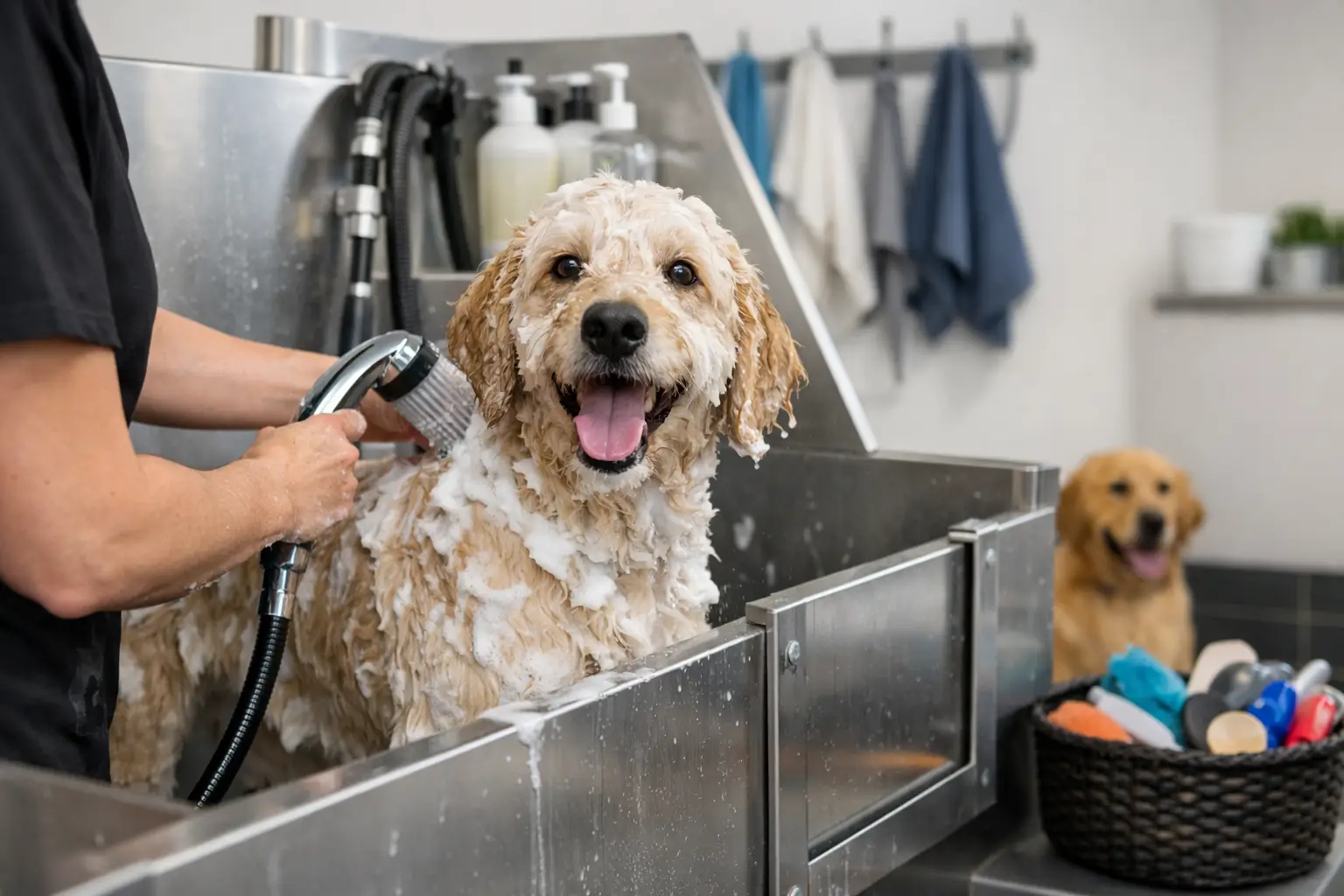
A beautiful retail space can lose its appeal in seconds if the dog washing area feels noisy, wet, or improvised. That is why a dog wash station for business should never be treated as a simple utility. In a premium setting, it becomes part of the brand experience - something clients see, photograph, remember, and judge.
For businesses that serve design-conscious dog owners, the right station does more than rinse shampoo. It signals standards. It suggests care, order, and a clear point of view. If your clientele expects elevated environments, every surface, finish, and user interaction has to support that expectation.
Why a dog wash station for business shapes perception
In a luxury-minded environment, function alone is not enough. Clients notice whether the station looks architectural or improvised. They notice whether the water controls feel intuitive, whether the area smells clean rather than damp, and whether the layout respects both the dog and the owner.
That matters because pet care is unusually intimate. Owners are handing over trust, not just payment. A thoughtfully designed wash station communicates that your business understands the emotional side of dog care as well as the practical side. It turns a routine task into a five-star touchpoint.
There is also a commercial reason to care. A station that photographs well and works smoothly supports repeat visits, stronger word of mouth, and better alignment with premium pricing. A station that feels clumsy or visibly worn can dilute the rest of the space, even if everything else is beautifully merchandised.
What to look for in a dog wash station for business
The best choices tend to balance aesthetics, durability, and ease of use. If one of those is missing, the weakness shows up quickly.
Design should feel intentional
The station should look like it belongs in the space. Clean lines, refined hardware, and a restrained material palette usually age better than trendy visual effects. In higher-end retail or grooming environments, a wash area should feel integrated into the brand rather than hidden like a back-room necessity.
That does not mean fragile finishes or precious details. The strongest premium spaces use materials that can handle daily use while still presenting beautifully. Texture matters. Color matters. Even the sound of the faucet matters more than many owners realize.
The experience must be easy for humans and dogs
A station may look striking in a showroom and still fail in use. Step-in height, leash points, splash control, drainage, and reach all affect whether the wash feels calm or chaotic. If clients are using it themselves, controls need to be clear at a glance. If staff are using it, the setup should reduce awkward bending, lifting, and cleanup.
Dog comfort is equally important. Stable footing, a non-slip surface, and enough room to position different breeds with confidence all influence how smooth the appointment feels. Nervous dogs react quickly to slippery floors, loud water, or cramped movement.
Hygiene should be visible, not assumed
Premium customers do not want to guess whether a wash area is well maintained. They want to see it immediately. Surfaces should wipe down easily. Corners should not collect residue. Drainage should move water away fast enough to keep the area polished between uses.
This is where many businesses make a poor compromise. A station can look elegant in a product photo but become visually tired after heavy use if the materials were chosen without thinking about hair, moisture, soap, and repeated cleaning. Practical refinement is the goal.
Self-service or staff-assisted?
This decision depends on the business model more than the trend cycle. Self-service stations appeal to clients who value independence, speed, and flexibility. They can work especially well in urban areas where dog owners want convenience without sacrificing quality. If the station is beautifully designed and simple to use, self-service can still feel elevated.
Staff-assisted washing offers a different kind of luxury. It creates a more hands-off, concierge-style experience and gives the business greater control over quality and presentation. That can be the stronger fit for boutiques, wellness-led concepts, or hospitality-driven spaces where service is central to the brand.
There is no universal answer. A self-service model usually demands clearer instructions, stronger water containment, and more durable interfaces. A staff-assisted model places more pressure on workflow, staffing, and consistency. The right choice is the one that matches how your clients already expect to interact with your brand.
The details that separate premium from ordinary
A high-end dog wash environment is often defined by the details clients do not consciously list, yet instantly feel.
Lighting is one. Bright, clinical light can make even a well-designed station feel cold. Soft but clear illumination tends to flatter materials and create a more composed atmosphere. Scent is another. The area should smell fresh and clean, never chemical-heavy.
Sound deserves more attention than it gets. Excessive splash noise, harsh dryers, or mechanical hum can unsettle dogs and make the space feel less luxurious. If calm is part of the brand promise, acoustic comfort matters.
Product presentation also changes the mood. Eco-conscious shampoos, neatly integrated dispensers, and well-placed towels communicate a level of care that feels editorial rather than utilitarian. This is one area where Doggo Paradiso's point of view feels especially current - technology, sustainability, and elevated design no longer sit in separate categories. The best businesses treat them as one experience.
Operational reality matters
A station can be visually flawless and still underperform if the day-to-day logistics are poor. Water usage, drying time, cleaning cycles, and traffic flow all affect profitability and staff efficiency.
If your business handles high volume, turnover speed matters. You need a layout that supports quick resets without making the experience feel rushed. If your model is more boutique and appointment-led, the pressure shifts toward presentation, comfort, and consistency.
Maintenance is another quiet differentiator. Premium clients are quick to notice scale buildup, scratched surfaces, loose fixtures, or drains that lag. These are not minor issues in a luxury environment. They are signals. When a business presents itself as curated, every touchpoint must stay aligned with that promise.
How to assess whether the investment is right
The first question is not what style you like. It is what role the station will play in the brand. Is it a practical amenity, a hero service, a visual centerpiece, or a technology-led signature? Your answer should shape every decision that follows.
The second question is who will use it most often. Frequent self-service by urban professionals creates one set of demands. White-glove staff use inside a boutique wellness concept creates another. The ideal station for one scenario may feel wrong in the other.
The third question is whether the station strengthens your pricing position. A premium business should invest where the client can feel the difference. Better ergonomics, quieter operation, beautiful finishes, and cleaner workflows often justify themselves because they support retention and brand perception, not just utility.
This is where restraint helps. More features are not always better. A station overloaded with visible components, signage, or technical complexity can feel less luxurious, not more. Premium usually means edited, considered, and calm.
A station should reflect the business around it
The best dog wash station for business is not simply the most advanced or the most expensive. It is the one that fits the environment with precision. In a polished retail setting, it should feel like part of the architecture. In a service-led concept, it should support ease and trust. In a modern pet lifestyle brand, it should blend beauty, performance, and a certain sense of discretion.
Dog owners with high standards notice when a business has thought through the details. They notice when the wash station feels elevated rather than improvised. And they remember spaces that respect both their dog and their own expectations.
If you are building a brand meant for discerning clients, choose a station that does more than get the job done. Choose one that quietly proves what your business stands for.