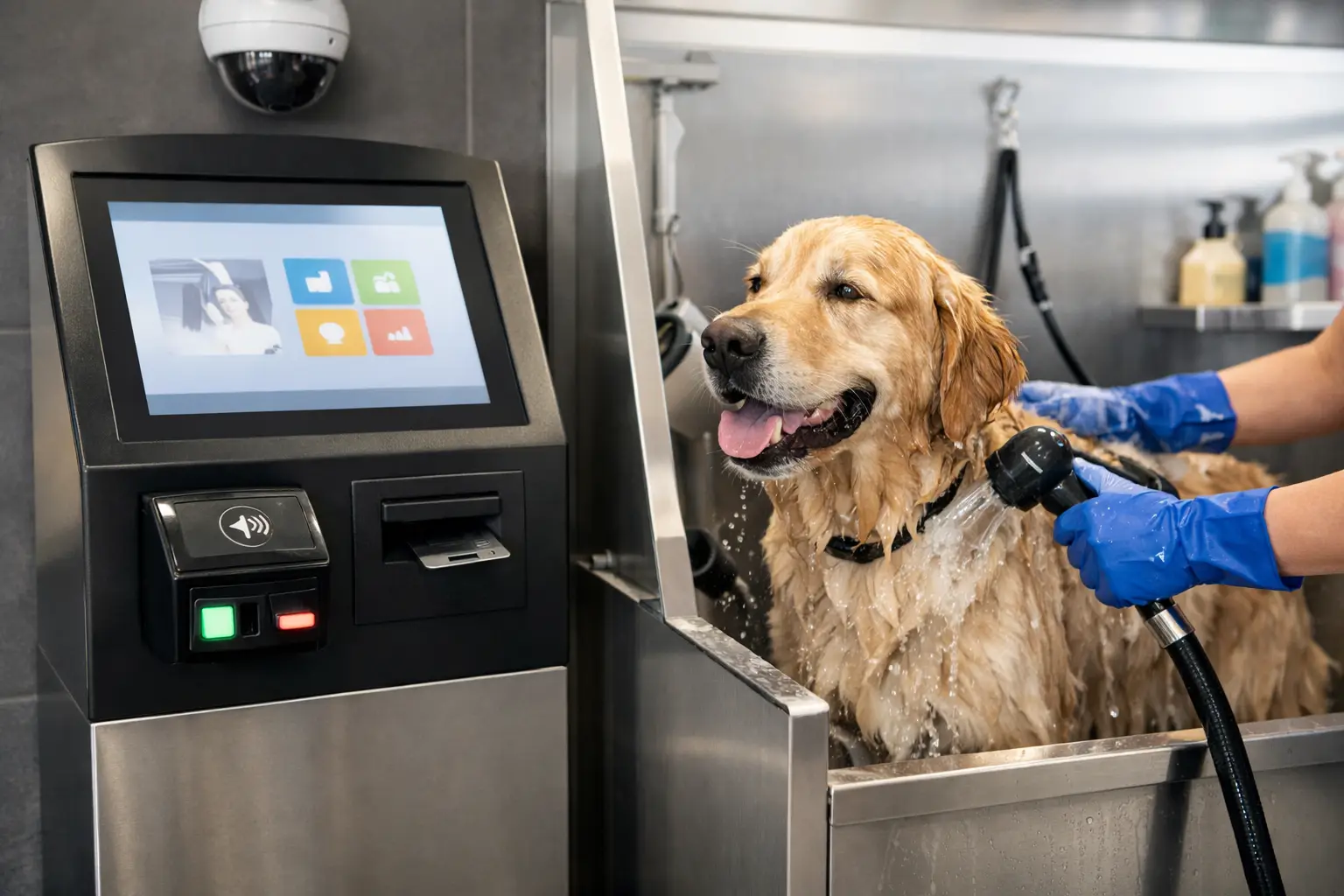
A self-service dog wash should feel composed from the first step inside. The best kiosk safety features do more than prevent obvious accidents. They shape the entire experience: a secure platform under paw, water that remains comfortably controlled, intuitive instructions for the owner, and equipment designed to be monitored and maintained with care.
For a design-led dog-wash destination, safety is not separate from luxury. It is part of the standard. Owners notice when a space is clean, organized, and considered. Operators benefit when every detail - from flooring to emergency procedures - supports consistent use and protects the dogs, people, and equipment in their care.
What safety means in a self-service dog wash
A dog-wash kiosk sits at the intersection of water, electricity, moving equipment, grooming products, and an animal that may be unfamiliar with the setting. A serious safety plan must account for all of them. It cannot rely on one feature, such as a textured floor or a hose with a simple shutoff.
The strongest installations use layers of protection. The physical structure reduces slipping and awkward movement. Water controls help avoid uncomfortable temperatures or excessive pressure. Electrical systems are housed and protected for wet conditions. Clear customer guidance helps owners make better decisions in the moment. Finally, regular operator checks ensure the kiosk remains as intended after repeated daily use.
This distinction matters for both audiences. A dog owner wants confidence before bringing a valued companion into the wash area. A retail operator or distributor needs to understand which safety measures are designed into the equipment, which depend on the site, and which require an ongoing maintenance routine.
Kiosk safety features that deserve close attention
Non-slip access and a stable wash zone
Wet floors change quickly. The entrance, ramp, steps, and wash base should all be designed to provide dependable traction when water and grooming residue are present. Drainage matters just as much. Water should move away from standing surfaces rather than collecting around paws or under an owner's feet.
A stable wash area also reduces the need for owners to overreach or lift awkwardly. Depending on the kiosk design, this can mean a low-entry tub, a well-integrated ramp, secure footing, and enough room for an owner to stay close without crowding the dog. Operators should inspect traction surfaces routinely, because wear, product buildup, and damaged edges can undermine a feature that looked excellent at installation.
Controlled water temperature and pressure
Water delivery is one of the most visible safety considerations. Temperature should be controlled within a safe operating range, with safeguards intended to prevent sudden extremes. The user interface should make the setting clear rather than leaving owners to guess from an unlabeled dial.
Pressure deserves the same attention. A dog-wash system should provide usable rinsing performance without creating an intimidating or uncomfortable spray. The spray head should be easy to hold, and the hose should reach the necessary areas without tangling around legs or creating a trip hazard.
For operators, this is not a place for assumptions. Ask for verified technical documentation on temperature controls, water-system components, recommended inspection intervals, and the procedure for taking the unit out of service if performance changes.
Electrical protection for wet environments
A polished kiosk may conceal much of its technical infrastructure, but the electrical design should never be an afterthought. Components need appropriate protection for their location in a wet-service environment. Cables, housings, access panels, and connections should be positioned and secured to limit accidental contact and moisture intrusion.
Emergency power isolation is equally valuable. Staff should know where it is located, how it works, and when it should be used. The control should be accessible without placing someone in a risky position, yet protected against casual or accidental activation.
A qualified installer and local code requirements are central here. A kiosk's published specifications may describe the equipment itself, while the final safety of the installation depends on site drainage, power supply, ventilation, and the work performed during setup. B2B buyers should assess both sides before approving a location.
A thoughtful approach to restraint points
Some wash stations include a designated attachment point to help an owner keep a dog positioned during washing. If a restraint feature is provided, its purpose, adjustment range, and intended use should be clearly communicated. It should never invite an owner to leave a dog unattended.
The hardware needs regular inspection for wear, sharp edges, or insecure fittings. Owners should remain present and attentive throughout the wash, with the ability to release the attachment promptly if the dog becomes unsettled. The right restraint design supports control without creating false confidence.
This is one area where the dog matters more than the hardware. A kiosk can offer a refined setting, but no feature can make every dog comfortable with every aspect of washing. Clear guidance should encourage owners to proceed at their dog's pace and stop if the experience is not going well.
Clear instructions, visible before they are needed
The most elegant safety feature may be simple information. Good instructions reduce hesitation and prevent avoidable mistakes. They should explain how to enter the wash area, start and stop the equipment, adjust settings where applicable, use the dryer if one is installed, and leave the space clean for the next guest.
Emergency information should be easy to find. Owners should know what to do if water does not stop, if a control appears damaged, or if they need immediate assistance. In a premium setting, this communication should be calm and concise, not crowded with warnings. Visual cues, clear icons, and well-placed signage often do more than dense text.
For international locations, language planning is part of usability. In Barcelona, Spanish and Catalan may be appropriate for consumer-facing instructions. At sites serving travelers or global audiences, carefully translated guidance can help preserve the same level of clarity.
Hygiene is a safety system, not a finishing touch
Cleanliness affects more than appearance. Hair, residue, standing water, and poorly maintained dispensers can create avoidable hazards. A well-managed kiosk needs a defined cleaning process between uses or at appropriate operating intervals, plus a deeper routine for drains, surfaces, touchpoints, and equipment compartments.
The exact program depends on the kiosk's materials, products used, traffic level, and local requirements. What matters is that responsibilities are explicit. Someone should inspect the wash zone for loose parts, blocked drainage, leaking fittings, damaged surfaces, and empty or compromised dispensers. If a problem is found, the unit should be clearly marked unavailable until it is resolved.
Consumables require discernment as well. Product containers should be secure, labeled, and checked for proper function. Operators should follow the product and equipment guidance provided by their suppliers rather than mixing formulas or improvising substitutions that may affect performance.
The operator safeguards that customers rarely see
A beautiful exterior should be backed by disciplined operations. Before selecting a kiosk, business partners should ask how the unit signals faults, what routine maintenance is required, which components are serviceable, and what support is available when the kiosk is offline. Verified answers are more valuable than broad promises.
A practical operating plan should cover staff training, cleaning documentation, inspection schedules, incident reporting, and escalation contacts. It should also define who checks the unit after opening, during busy periods, and at closing. These procedures protect the customer experience while making issues easier to identify early.
Remote monitoring, alerts, and usage data can be helpful where they are available and properly configured, but they do not replace in-person checks. A sensor may identify a technical exception. It cannot always identify a slippery residue, a confusing sign, or a fitting that feels loose to the touch.
Questions to ask before choosing a kiosk
For B2B decision-makers, the clearest path is to separate confirmed specifications from desired features. Request documentation and discuss the actual site conditions. Four questions can bring focus to the conversation:
- How are water temperature, pressure, drainage, and electrical protection designed and tested?
- Which safety components are included with the kiosk, and which must be supplied or configured at the installation site?
- What maintenance tasks are required, how often are they recommended, and who is qualified to perform them?
- What are the recommended procedures for faults, water leaks, damaged parts, and customer incidents?
The answers should be specific enough to inform training and operational planning. If details are unavailable, that is a reason to pause, not a reason to fill the gap with assumptions.
For a premium pet-lifestyle setting, kiosk safety features become part of the promise made to every guest. The most compelling wash space is not the one with the longest feature list. It is the one where thoughtful design, verified equipment, and attentive care make confidence feel natural.