
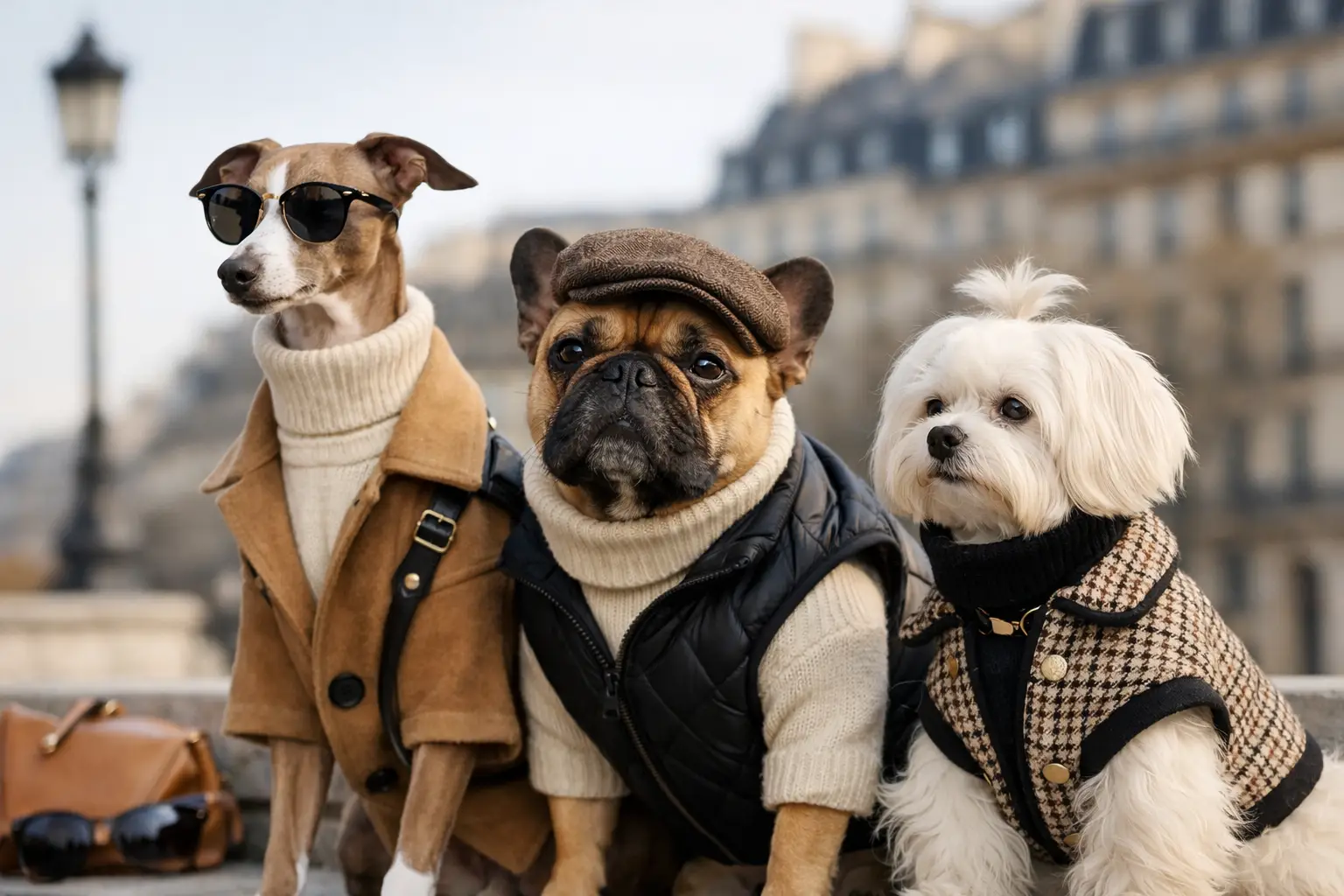
A tailored denim jacket that holds its line on a city walk. A sculptural collar in a saturated, deliberate color. A rain layer that looks considered rather than technical. European dog fashion brands have changed what a dog wardrobe can be: not a novelty, but an extension of a well-designed life.
For American owners with a strong point of view, this matters. Your dog is present for the coffee run, the weekend trip, the terrace lunch, and the photographs that capture all of it. The pieces they wear should feel at home in those moments. European design offers a distinctive answer: fashion with proportion, material integrity, and a little restraint.
What Defines European Dog Fashion Brands
European dog fashion is not one uniform look. Barcelona brings sun-washed ease and graphic confidence. Milan favors polish, strong finishes, and fashion-forward tailoring. Paris leans into detail, texture, and a more couture-minded sense of occasion. Scandinavian influences often pare everything back to clean forms and purposeful function.
What connects these approaches is a belief that canine accessories deserve the same design attention as a favorite leather bag or an impeccably cut jacket. The silhouette matters. Hardware matters. The way a harness sits across the chest matters. Even the lining of a carrier can signal whether an item was designed with genuine care or simply decorated for attention.
The best pieces do not ask your dog to become a costume character. They sharpen their natural presence. A confident French bulldog does not need embellishment to make an entrance. A graceful whippet benefits from a coat that respects its elegant frame. A small dog can wear a structured piece without disappearing beneath it.
Fashion Is Only Convincing When the Fit Is Right
A beautiful dog coat that restricts a shoulder or twists during a walk is not luxury. It is styling without substance. This is where thoughtful European-inspired design earns its place.
Look first at movement. The neckline should allow easy turning and comfortable breathing. The chest should have enough room for a natural stride, especially on dogs with a broad front or deep rib cage. Fastenings should sit where they will not rub, pull fur, or disrupt the line of the garment. For harnesses, the balance between control and freedom is essential.
Sizing deserves more attention than many owners give it. Weight is only a starting point. Measure the neck, chest, and back length, then consider your dog’s build. A compact Boston terrier, a long-backed dachshund, and a lean Italian greyhound may wear the same nominal size, but they will not need the same cut.
It also depends on how the piece will be used. A denim overshirt for a short afternoon outing can be closer-fitting and more expressive. A layer intended for a long walk, travel day, or changing weather needs greater flexibility. The most polished wardrobe is not the one with the most pieces. It is the one in which every piece has a clear purpose.
Materials Should Feel as Good as They Look
The material story is often the difference between a fashionable accessory and a lasting one. Cotton denim, soft technical textiles, responsibly sourced leather, sturdy woven webbing, and smooth metal hardware each bring a different character. The question is not whether every item needs to be formal or delicate. It is whether the material suits the moment.
Denim has particular appeal because it carries cultural weight without feeling precious. It can look relaxed, urban, and unmistakably styled. In a well-cut dog jacket or vest, denim provides structure while remaining familiar and wearable. The finish should be soft enough for comfort, with seams placed carefully to avoid irritation.
Leather remains a classic choice for collars and leashes, especially when it develops a richer character over time. Yet it is not automatically the right answer for every routine. A water-focused weekend, frequent travel, or an energetic dog may call for refined performance materials instead. Luxury is not about insisting on one material. It is about choosing the right one with intention.
How to Build a Dog Wardrobe With a European Point of View
Start with a signature layer. This is the piece that immediately establishes a visual identity, such as a tailored denim jacket, a refined knit, or a clean-lined coat. It should work with your dog’s coloring and frame while still feeling unmistakable from across the room.
Then select the daily essentials with equal care. A collar and leash are seen more often than any seasonal garment, so they should feel worthy of that visibility. Consider finish, scale, and hardware tone. A substantial buckle can look exceptional on a larger dog, while a smaller dog may benefit from lighter, more proportionate detailing.
Add a travel or weather piece only when it earns its place. An elevated carrier is valuable for dogs who accompany you through airports, hotels, and city interiors. A rain layer makes sense in a climate where it will be worn often. The goal is not to create an elaborate closet. It is to create options that move naturally through your life.
Color should be edited, not accidental. Rich indigo, warm camel, black, cream, forest green, and deep red tend to photograph well and age gracefully. A single vivid accent can be memorable, but too many competing colors can shift the look from editorial to overworked. Let one element lead, whether that is the garment, the collar, or the hardware.
The Details Discerning Owners Notice
Luxury shows up in small decisions. Consider whether the stitching is even and clean. Notice whether a buckle feels smooth in the hand. Check if the clasp is substantial without being cumbersome. Look at the placement of a logo. A discreet mark often feels more confident than oversized branding.
Function should be visible without dominating the design. Adjustable points should be easy to use. A leash attachment should be secure and thoughtfully positioned. Removable linings, washable surfaces, and sturdy closures add real value because they protect the experience of owning the piece, not just its appearance on day one.
Sustainability belongs in this conversation as well, but it should be treated as a standard rather than a slogan. Longer-lasting materials, considered production, and products designed to stay in rotation are more meaningful than disposable trend cycles. Buying fewer pieces with a strong point of view is often the most elegant choice.
European Dog Fashion Brands for an American Lifestyle
The appeal of European dog fashion brands in the United States is not about recreating a Parisian sidewalk or a Mediterranean promenade. It is about bringing the same standards of design into an American lifestyle that is already style-conscious, social, and mobile.
In New York, a compact, tailored layer and refined walking set can take a dog from apartment elevator to dinner reservation with ease. In Los Angeles or Miami, lighter fabrics, polished collars, and expressive color may feel more natural. In San Francisco, a weather-ready coat with a clean silhouette can be both practical and impeccably composed.
Doggo Paradiso takes this perspective from its Barcelona roots into a modern American setting, pairing European design language with the needs of dogs who are fully part of their owners’ lives. The point is not to dress for attention. It is to choose pieces that make attention feel inevitable.
A well-dressed dog does not need a crowded wardrobe or a dramatic entrance. Start with one exceptional piece that fits beautifully, wears comfortably, and reflects the way you move through the world together. That is where personal style becomes a shared experience.