
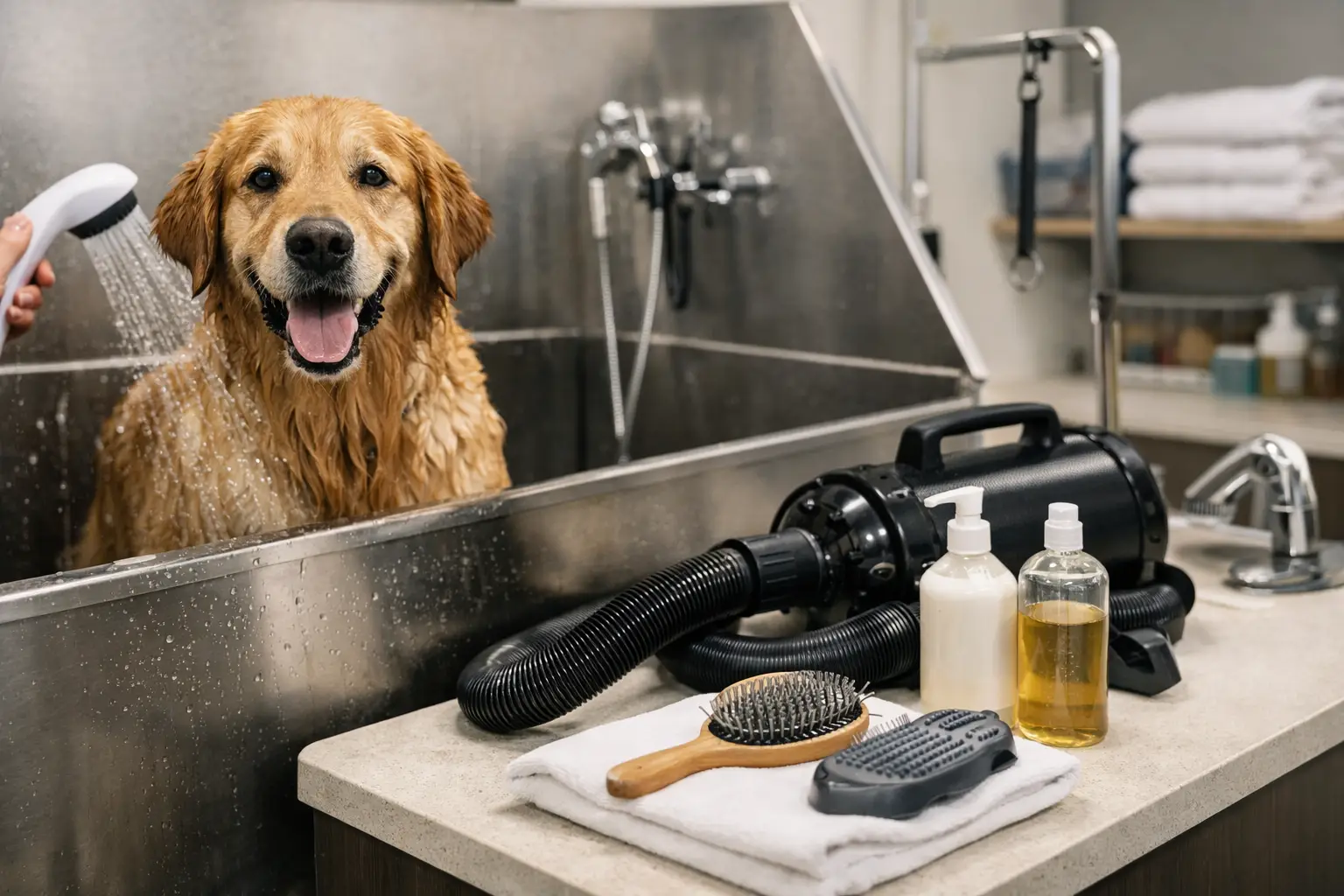
A beautiful dog-wash space can create immediate confidence. Yet polished finishes alone do not tell you how the equipment will perform after a wet weekend, a muddy coat, or hundreds of repeated uses. Knowing how to evaluate bathing equipment means looking beyond appearance to the details that protect the dog, support the handler, and preserve a refined experience over time.
For a design-led home, salon, retail concept, or self-service wash location, the right choice balances tactile quality with practical discipline. The equipment should feel considered from the first touch, then continue to work well when water, shampoo, hair, and daily cleaning become part of the picture.
Start With the Bathing Experience
Begin with the dog and the person handling the wash. A bathing unit may be technically capable, but it is not well chosen if entry feels awkward, the working height strains the user, or the layout creates unnecessary movement around a wet floor.
Look at how a dog enters and exits. Smaller dogs may need a gentle approach height, while larger dogs need enough interior space to stand and turn without feeling confined. Doors, ramps, and access points should operate predictably and avoid gaps, edges, or mechanisms that could catch fur, paws, leashes, or clothing.
The handler’s position matters just as much. Consider whether the controls are reachable without leaning across the dog, whether the wash area allows a natural stance, and whether towels and grooming essentials can be placed nearby without cluttering the space. In a premium setting, ease is part of the luxury. The process should feel composed, not improvised.
For a self-service installation, observe the complete guest journey. Is the instruction panel easy to understand at a glance? Can a first-time visitor identify where to secure their dog, start the wash, and clean up afterward? The best equipment does not require a long explanation to feel intuitive.
How to Evaluate Bathing Equipment for Build Quality
Materials shape both first impressions and long-term reliability. Stainless steel is widely valued in professional bathing environments because it is durable, easy to wipe down, and visually clean. Its grade, finish, weld quality, and construction still deserve close inspection. A unit that looks excellent in a showroom can reveal rough seams, weak joints, or difficult-to-clean corners after installation.
Examine the tub or wash chamber from every angle. Interior surfaces should be smooth and free from sharp edges. Seals and joins should be tidy, since these are the areas where moisture and residue can collect. Exterior panels should feel stable rather than flexing under ordinary use.
Floor texture is another quiet but decisive feature. Dogs need a surface that offers secure footing when wet. A removable non-slip mat can make cleaning easier, provided it sits flat and does not curl at the edges. If the flooring is integrated, ask how it will be cleaned and whether replacement is possible if it becomes worn.
Fixtures deserve the same attention. Test the sprayer hose, faucet, controls, and any restraint points. Hoses should reach the full bathing area without dragging awkwardly. Controls should be clear and substantial enough for frequent use. A restraint system should support safe positioning without encouraging a dog to become tangled or left unattended.
A premium finish should age gracefully. Choose surfaces that suit the character of the location, but do not let a dramatic color or decorative panel conceal a complicated cleaning routine. The most elegant choices are usually the ones that remain crisp after repeated care.
Treat Water Management as a Design Decision
Drainage is not a back-room technicality. It influences cleanliness, odor control, slip risk, and the atmosphere of the entire space.
Ask where water will travel during and after a wash. The tub should drain efficiently, while the surrounding floor should be planned to handle splashes without creating standing water. Hair management is equally essential. A removable hair trap or filter that can be accessed and cleaned easily helps protect the drainage system and keeps the wash area presentable for the next user.
For operators, this is where site assessment becomes essential. Confirm plumbing requirements, drain placement, water pressure, electrical needs, ventilation, and any local building or accessibility requirements before selecting a model. Equipment is only one part of the installation. A beautifully specified unit can become an expensive compromise if the site cannot support it properly.
If you are considering automated dog-wash technology, request the verified utility requirements for the exact model and configuration. Do not rely on generalized claims about water use, energy use, or cycle length. Ask for current technical documentation, installation drawings, and a clear explanation of what the operator is expected to provide on site.
Look Closely at Safety Features and Operating Controls
Safety should be visible in the design, not hidden in a brochure. Check that surfaces are stable, entry points close securely, and controls are positioned away from direct splash zones where appropriate. The unit should be designed to reduce obvious hazards such as sharp corners, exposed connections, unstable flooring, and poorly protected moving parts.
For automated equipment, understand exactly how the system responds if a user stops the session, if a component needs attention, or if there is an interruption to water or power. Ask which safety mechanisms are included, how they are tested, and what daily checks are recommended. The answer should be specific to the model, not a broad promise of convenience.
This is also the moment to assess the instructions. Clear language, simple symbols, and concise guidance help users make better decisions. In locations serving international visitors, multilingual instructions may be worth considering. In Barcelona, Spanish, Catalan, and English can support a more welcoming, polished experience when appropriate to the site.
Evaluate Maintenance Before You Commit
Every bathing system requires care. The better question is whether maintenance is organized, accessible, and realistic for the people responsible for it.
Ask to see the daily, weekly, and periodic maintenance schedule. Identify which parts require cleaning, inspection, replacement, or professional service. Pay close attention to hair filters, drainage components, hoses, spray heads, dispensers, seals, and any equipment that interacts with water.
For a business operator, maintenance should be considered alongside staffing and opening procedures. Can a team member access the relevant components without dismantling the unit? Are spare parts clearly identified? Is technical support available in the markets where you plan to operate? What training is provided at installation, and what documentation remains on site for new staff?
A self-service dog-wash kiosk also needs a clear hygiene standard between guests. The operator should be able to define who cleans the space, when checks take place, and how supplies are replenished. This protects the customer experience as much as the equipment itself. A spotless station signals care. A neglected one changes the perception of the entire business.
Match Capacity to Your Real Setting
The most impressive equipment is not always the right equipment. A compact urban retail location has different needs than a destination grooming concept, a residential community amenity, or a multi-location pet business.
Measure the physical footprint, but also measure the working zone around it. Leave room for door swing, cleaning access, guests with dogs, towel storage, and any adjacent retail or grooming activity. Consider acoustics as well. Pumps, dryers, and water movement can shape the feel of a small interior more than expected.
Think about the dogs your location is designed to welcome. A unit sized for smaller breeds may not suit a broad range of adult dogs. Conversely, an oversized installation can dominate a limited floor plan and make the environment feel less inviting. The best fit is intentional, not maximal.
For B2B buyers, compare proposals on a like-for-like basis. Separate the equipment price from site preparation, installation, payment systems, consumables, staff training, service plans, and any required permits. Ask suppliers to clarify what is included, what is optional, and what remains the operator’s responsibility. This creates a more accurate basis for decision-making than a headline price alone.
Test the Experience in Person
When possible, see the equipment operating in a real setting. Run your hand along the interior surfaces. Open the door or gate. Reach for the controls. Inspect the drain access. Imagine cleaning it at the end of a busy day rather than admiring it at a launch event.
Ask for references, technical documents, warranty terms, and a demonstration of the specific configuration under consideration. If the purchase supports a commercial location, involve the people who will use, clean, and manage the equipment. Their practical observations often reveal issues that a design review can miss.
Doggo Paradiso approaches the dog-wash category as part of a broader premium lifestyle experience: technology should serve the setting, while design should make care feel elevated. That standard is useful wherever you are evaluating equipment.
Choose the bathing system that continues to look considered after the water has drained, the towels are folded, and the next dog is ready to step in.