
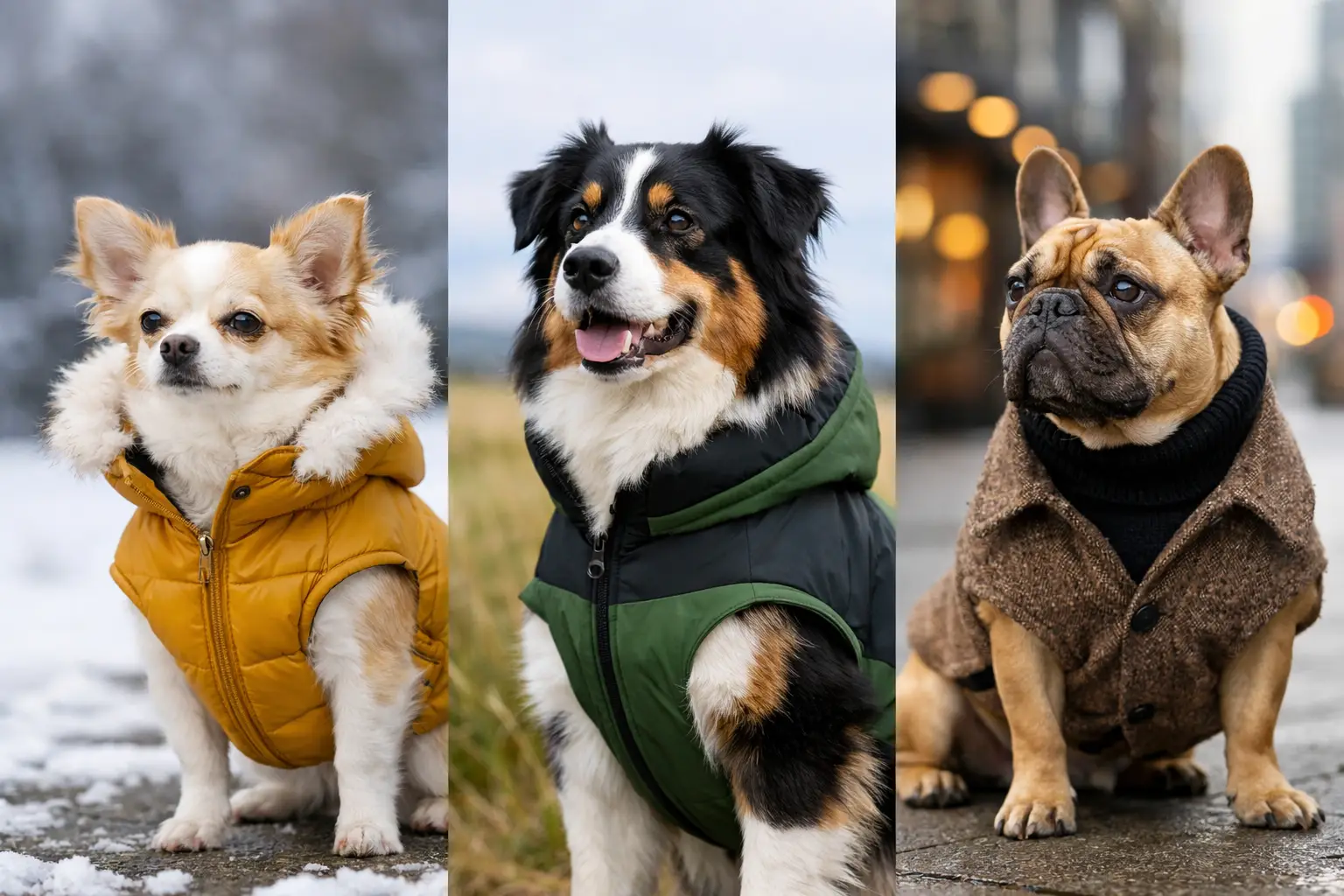
A sharp coat can transform a cold-weather walk, but the real question is not whether it looks good. It is when should dogs wear coats for genuine comfort. The answer sits at the intersection of temperature, weather, breed, body shape, age, activity, and the amount of natural insulation a dog already carries.
For design-led owners, that makes a dog coat more than a seasonal accessory. It is a considered layer: one that protects without restricting movement, looks refined without overheating, and earns its place in a well-curated wardrobe.
When Should Dogs Wear Coats?
Dogs should wear coats when their natural coat and body condition are unlikely to keep them comfortable in the conditions outside. A small, short-haired dog on a damp January morning has very different needs from a large, double-coated dog moving briskly through crisp, dry air.
Temperature matters, but it is not the only measure. Wind strips warmth from the body. Rain flattens fur and reduces its insulating effect. A dog standing beside an outdoor café or waiting at a crosswalk cools down faster than one walking at a lively pace. The same coat that feels perfect for a slow city stroll may be excessive during a long run.
As a practical starting point, many short-haired, small, lean, senior, or very young dogs benefit from a coat once temperatures fall below about 45°F. Near freezing, more dogs may appreciate an added layer, especially in wind or rain. These are guideposts, not rules. Your dog's build, fur, energy level, and behavior should lead the decision.
The Dogs Most Likely to Appreciate a Layer
A dog with a naturally dense double coat often has significant protection built in. Breeds developed for cold climates can usually manage cool, dry weather well, provided they are active and conditions are not severe. Adding a heavily insulated coat too early can leave them uncomfortably warm.
Dogs with short, fine, single-layer coats tend to lose heat faster. So do small dogs, whose bodies cool more quickly because of their size, and lean, athletic dogs with little body fat. A sleek Italian Greyhound, Whippet, Miniature Pinscher, or Chihuahua will usually have a very different cold-weather wardrobe from a Husky, Samoyed, or Newfoundland.
Age changes the equation too. Puppies and older dogs can be less adaptable to cold conditions, while dogs recovering from a close trim may need extra protection until their natural coat returns. This is not about wrapping every dog in padding. It is about recognizing when a dog's usual insulation is not enough for the moment.
Behavior offers useful clues. A dog that shivers, lifts its paws repeatedly, slows down, hunches its back, seeks shelter, or seems eager to return indoors is communicating discomfort. A coat may help, but a shorter walk may be the more elegant choice. No garment should turn a miserable outing into an obligation.
Rain, Wind, and the City Effect
Dry cold and wet cold are not interchangeable. In a city such as Barcelona, winter temperatures may look mild on paper, yet damp sidewalks, sea air, and wind can make a short-haired dog feel chilled quickly. In New York, Chicago, or San Francisco, gusts between buildings can have a similar effect. Weather is felt at street level, not only on a forecast.
For wet days, a water-resistant outer layer can be more useful than a thick insulated coat. The goal is to keep the dog's natural fur from becoming saturated while allowing warmth to escape during movement. For truly cold, wet weather, a layered design with a protective shell and light insulation offers more versatility than one bulky piece.
Wind deserves the same attention. A fitted coat with good coverage across the chest and belly can reduce exposure where many dogs feel the cold first. A cape-like style may photograph beautifully, but it can shift in gusts and leave the underside exposed. High fashion still needs to perform at curbside.
Choose the Right Weight, Not the Thickest Coat
The finest dog wardrobe works like a personal wardrobe: different layers for different conditions. A light rain shell suits drizzly walks and transitional weather. A midweight quilted coat works well for cool mornings and relaxed urban outings. A warmer insulated layer belongs to genuinely cold conditions, particularly for dogs that are small, short-haired, or less active.
A coat should never be selected by appearance alone. Look for a secure, adjustable fit at the neck and chest, freedom through the shoulders, and enough length to cover the back without interfering with the tail. The belly panel matters as much as the top line, especially for low-to-the-ground dogs exposed to wet pavement.
The fabric against the body should feel smooth and non-irritating. Hardware should sit away from pressure points. If a harness is worn underneath, make sure the coat accommodates it cleanly rather than compressing straps or twisting during a walk. Thoughtful construction is visible in the details: a coat stays in place, preserves a dog's natural stride, and looks composed from every angle.
When a Coat Is Too Much
A coat is not automatically better because the day is cold. Dogs can overheat, particularly when they are active, have thick natural fur, or move from outdoor air into warm cars, stores, or homes. Remove the coat once the conditions change instead of leaving it on out of convenience.
Watch for panting unrelated to exertion, restlessness, attempts to move away from the garment, or a body that feels unusually warm beneath the fabric. A dog that seems comfortable at the start of a walk may need a lighter layer after ten energetic minutes. The right choice is responsive, not rigid.
Avoid placing coats on dogs with wet fur unless the garment is designed as a protective outer shell and the dog is still comfortable. Trapping moisture beneath insulation can make a dog colder rather than warmer. After rain, dry the coat before the next outing. Premium materials retain their shape and finish better when cared for with the same attention given to any favorite piece.
Make Coat-Wearing Feel Natural
Even a beautifully tailored coat needs a calm introduction. Let your dog inspect it indoors. Place it on for a few brief moments, reward relaxed behavior, and remove it before impatience sets in. Build gradually until the garment signals a pleasant walk rather than an unfamiliar interruption.
Fit should be checked in motion, not only while standing still. Watch your dog walk, sit, turn, and climb a curb. A coat that bunches at the shoulders, rides up at the neck, or restricts the front legs is not the right silhouette, however striking it may look.
For owners who see daily walks as part of a shared lifestyle, this is where fashion becomes personal. Doggo Paradiso approaches seasonal dressing with that balance in mind: polished pieces should complement a dog's comfort, movement, and individual presence.
Build a Small Cold-Weather Edit
Rather than collecting several versions of the same coat, curate a concise rotation around your local climate and your dog's needs. A dependable rain layer, a refined midweight coat, and a warmer option for the coldest days will cover most urban routines. In warmer regions, the first two may be all that is needed. In colder cities, a fourth piece for deep winter can be worthwhile.
Color and finish can be expressive, but visibility also matters on gray afternoons and early evenings. Consider how a coat works with your preferred collar, leash, or harness. A coordinated look feels intentional, yet practicality should have the final word. If the garment is difficult to fasten, impossible to layer, or unsuitable for the weather, it will remain beautiful but unused.
The best dog coat is not a costume for winter. It is a well-chosen layer that lets your dog move through the season with ease, warmth, and unmistakable style. Read the weather, read your dog, and let comfort set the dress code.