
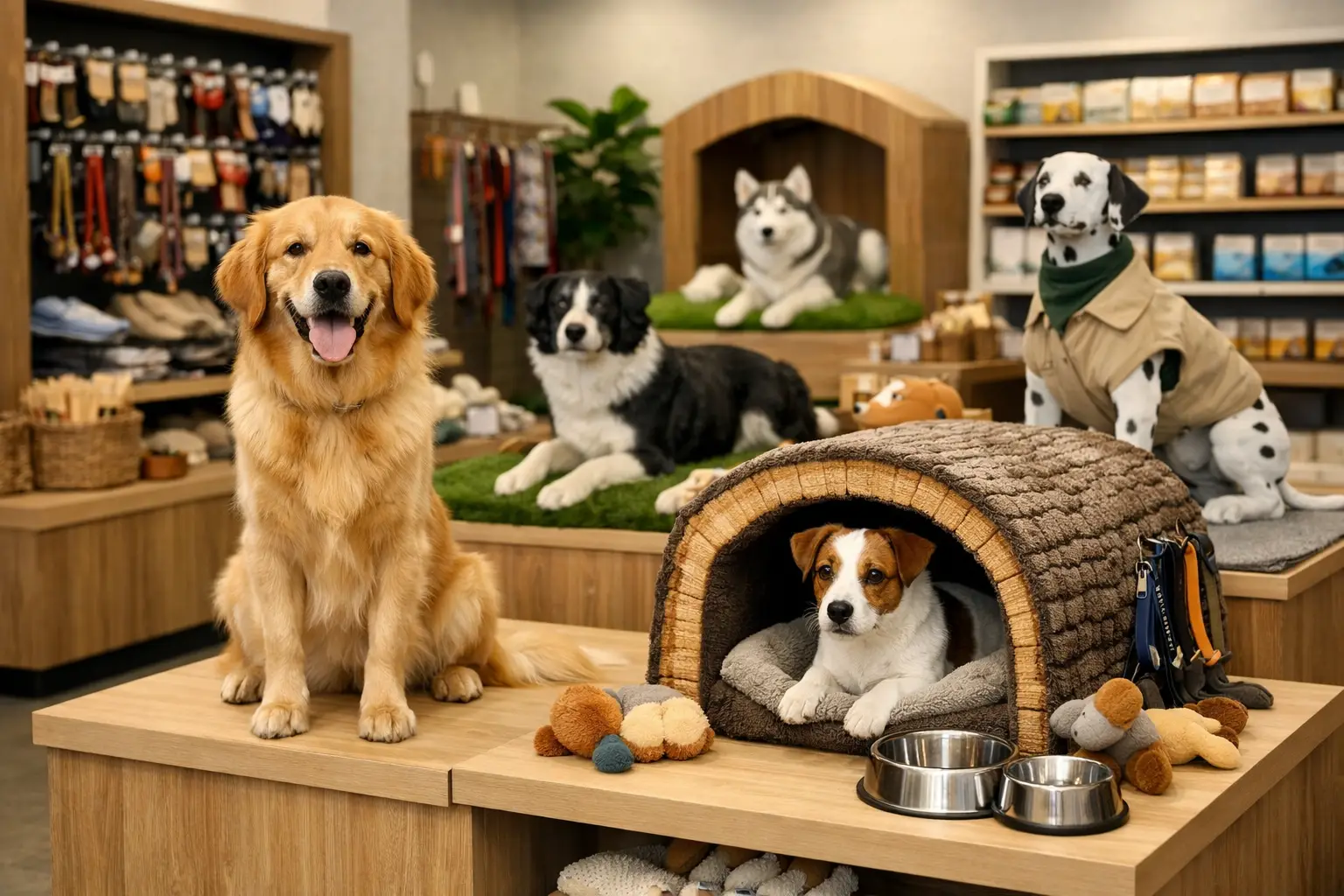
A collar can be beautifully made and still disappear on a crowded wall. A grooming ritual can feel five-star and still lose its appeal when the space around it feels improvised. The strongest pet retail displays do more than hold inventory. They give premium dog products a setting, a rhythm, and a reason to be noticed.
For design-led dog owners, shopping is not simply a transaction. It is part of the lifestyle they share with their dog. The store should make that relationship visible through considered materials, clear editing, and moments that invite a closer look.
Pet Retail Displays Should Create a Point of View
A premium retail environment begins with restraint. When every leash, toy, accessory, and wellness item asks for attention at once, nothing feels exceptional. The answer is not more signage or more fixtures. It is a stronger point of view.
Start with a single visual idea for each zone. A fashion-focused area might center on seasonal color, silhouettes, and texture. A wellness area can feel quieter, with clean forms and a sense of ritual. Luxury travel accessories deserve room to show their shape and finish, rather than being stacked like standard merchandise.
This approach respects the customer’s eye. It also makes products easier to understand. A carefully placed carrier tells a story about weekends away. A sculptural leash display suggests a polished daily walk. The display becomes editorial, not decorative.
The most effective spaces do not attempt to show every option at once. They show the right selection, then make the rest easy to discover. That balance is especially valuable for premium collections, where perceived quality depends on space as much as material.
Build the Store Around How People Move
Retail displays work best when they follow real behavior. A customer entering with a dog needs a clear path, enough physical space, and an immediate sense of where to begin. The first display should establish the standard of the store without creating congestion.
Place high-impact pieces near the entrance, but avoid turning that area into a crowded showcase. One strong seasonal statement, a refined mannequin moment, or a styled grouping of collars and leashes can set the tone. From there, the store should unfold naturally through distinct but connected zones.
The central floor is ideal for discovery. Low fixtures, display tables, and freestanding forms can encourage browsing while preserving sightlines. Keep products within reach, yet give each composition enough air to feel intentional. Customers should be able to move with their dog without navigating a maze of racks.
The perimeter can carry deeper assortments. This is where wall displays earn their place: organized collections of fashion, grooming essentials, or travel pieces, presented with enough repetition to feel abundant but not overwhelming. Vertical displays are useful, but they should not become a visual grid with no hierarchy. Vary the scale. Create pauses. Let one exceptional piece lead the eye.
Let Materials Signal Quality Before a Product Is Touched
In luxury retail, the fixture is part of the product experience. Metal, warm wood, textured stone, lacquered surfaces, and soft upholstery can each work beautifully when chosen with discipline. The goal is not to imitate a human fashion boutique. It is to create a dog-centered environment with the same attention to proportion and finish.
Material choices should support the merchandise. A highly colored fashion collection may need calm, neutral fixtures. Minimal accessories can benefit from a warmer or more tactile backdrop. Glossy surfaces bring light and polish, but too much reflection can distract from smaller products. Open shelving feels modern, while enclosed cases can add distinction to limited pieces or refined hardware.
Durability matters, particularly in a space designed to welcome dogs. Premium does not mean precious. Surfaces should look considered while being practical for regular cleaning and daily foot traffic. This is one of the most useful trade-offs to acknowledge early: a delicate material may look striking in a concept board, but a resilient finish often serves the store better over time.
Lighting deserves the same care. Bright overhead lighting can flatten texture and make even beautiful merchandise look ordinary. Layered illumination creates depth. General lighting supports navigation, focused lighting gives hero products presence, and softer accents can make a grooming or relaxation area feel more intimate.
Merchandise in Scenes, Not Categories Alone
A wall marked only by product type is functional, but rarely memorable. Premium pet retail displays become more compelling when they show customers how pieces belong together.
Instead of presenting collars, leashes, and carriers as separate departments, build a walk-ready edit around a color story or occasion. Pair an elevated collar with a matching leash, a refined bag, and one considered accessory. The customer can immediately imagine the complete look without feeling pressured into a bundle.
Seasonality gives these scenes momentum. A spring collection may lean into lighter textures and luminous color. A holiday presentation can become richer and more tactile without resorting to clutter. The key is to refresh the story, not merely rotate stock. Even a small display update can make regular visitors see familiar products differently.
This principle also applies to wellness. Rather than lining products in rows, create a calm care station with a few purposeful selections. Keep language concise. A product’s texture, fragrance profile, or place within a grooming ritual can be communicated through visual cues and thoughtful placement rather than oversized promotional messaging.
Give Smart Services Their Own Architecture
Technology can elevate a pet-lifestyle destination when it is presented as part of the experience, not as an afterthought. An automated dog-wash kiosk, for example, should have a dedicated setting that feels clean, calm, and easy to understand from the moment a customer approaches it.
For operators considering a kiosk, the retail question is larger than where the unit fits. Consider arrival and exit paths, waiting space, sightlines, flooring, storage, cleaning procedures, and the relationship between the wash area and adjacent merchandise. The kiosk should be accessible without interrupting the store’s main flow or making fashion and accessory displays feel secondary.
Clear information is essential, particularly for a first-time user. The customer should know where to begin, what to expect from the service, and where to find assistance if needed. Instructions should be visually refined but unambiguous. In a premium setting, confidence comes from clarity.
The wash area can also create a natural connection to grooming and wellness products. That connection should feel curated, not opportunistic. A small, edited presentation near the exit may be more effective than filling every nearby surface with product. The service creates the moment; the retail display should complement it.
For B2B partners, this is where design and operations meet. A display plan must account for the operator’s daily workflow as well as the customer’s impression. Beautiful fixtures that obstruct access, complicate cleaning, or reduce circulation create friction. The best concept is one that remains polished on a busy day, not only at opening time.
Design for Photography, Then Design Beyond It
A striking display can earn attention on social media, but it must still function in person. This distinction matters. A dramatic installation may make a memorable image, yet fail if it hides price information, blocks movement, or makes products difficult to handle.
Create one or two highly recognizable moments rather than trying to make every corner photogenic. A seasonal feature wall, a sculptural display table, or a beautifully framed grooming zone can carry the visual identity of the store. The rest of the space should support a relaxed, intuitive shopping experience.
Doggo Paradiso approaches this balance through a broader idea of pet lifestyle: fashion, wellness, accessories, and smart services presented as parts of one elevated world. That is the opportunity for any premium operator. Do not treat displays as fixtures filled at the end of a project. Treat them as the physical expression of the standard your brand intends to keep.
The most memorable retail spaces leave customers with more than a purchase. They offer a clearer image of life with their dog: well designed, thoughtfully cared for, and a little more extraordinary each time they walk through the door.