
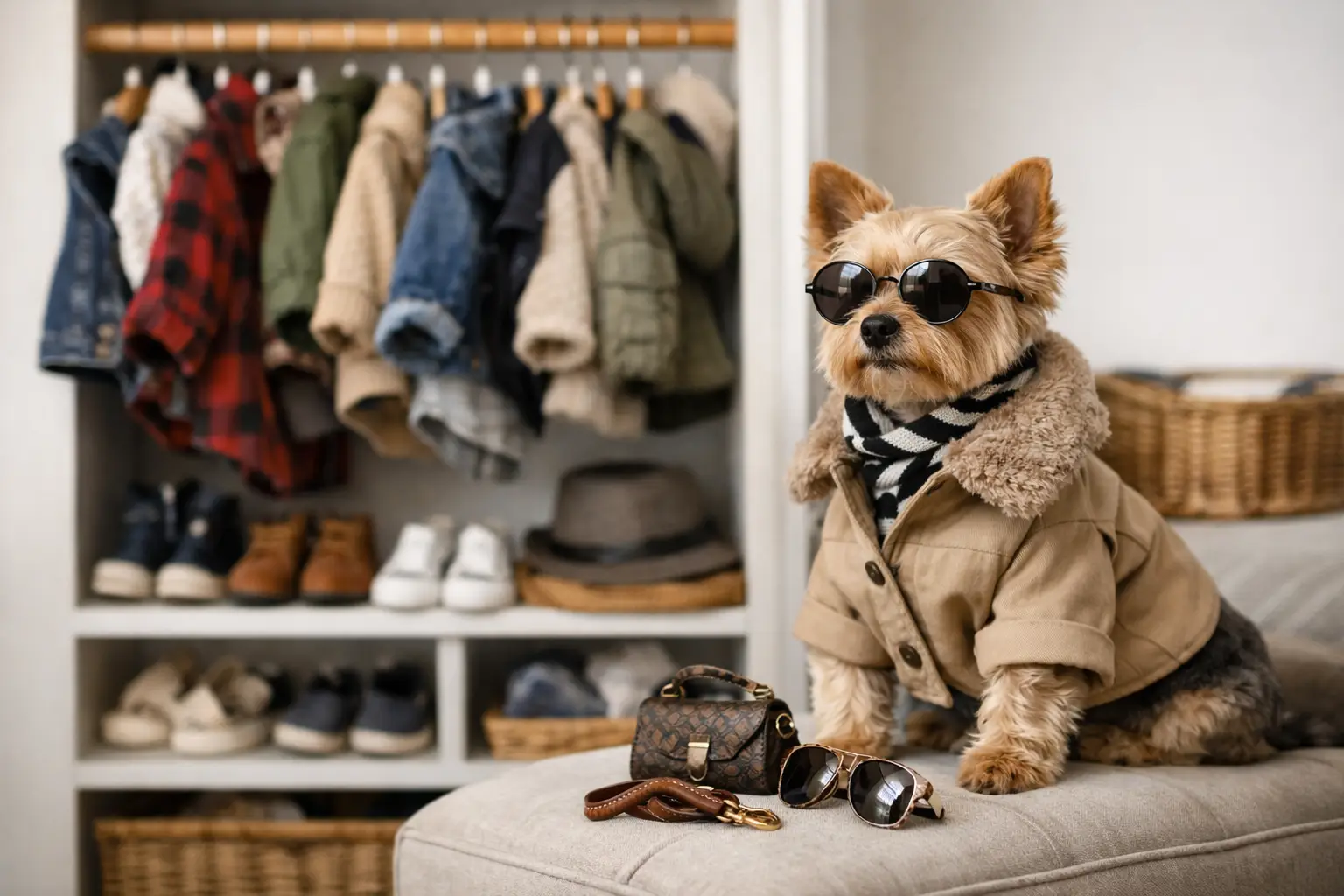
A dog wardrobe should not begin with a crowded drawer of novelty pieces. It should begin with a point of view. Learning how to build a dog wardrobe means choosing clothing and accessories that suit your dog's proportions, your shared routine, and the places you go together. The result is not costume. It is a considered collection that looks polished from the first morning walk to a weekend away.
For owners with an eye for design, a well-dressed dog is part of the visual rhythm of life. A tailored harness beside a clean leather tote. A denim layer that feels at home on a city sidewalk. A weather-ready coat that performs beautifully without interrupting the look. The best wardrobes bring function and personality into the same frame.
Start With Your Dog's Everyday Life
Before choosing colors or collections, consider the life your dog actually lives. A compact dog who joins you for coffee in Manhattan has different wardrobe needs than an active companion who spends weekends on the California coast. The goal is not to dress for every imaginable scenario. It is to build around the moments that occur often.
Think about climate, travel, daily walk times, and how your dog moves. A short-coated dog may benefit from a warm outer layer in a Chicago winter, while a dog in Miami may need lighter pieces with an easy, breathable fit. If your dog frequently rides in a carrier, visits outdoor patios, or accompanies you on flights, those routines should guide the edit.
Temperament matters just as much as weather. Some dogs accept clothing with complete ease. Others need a gradual introduction and fewer, softer pieces. A beautiful garment is only successful if your dog can walk, sit, stretch, and settle comfortably in it. Luxury should feel effortless from their perspective too.
How to Build a Dog Wardrobe Around Core Pieces
The most elegant wardrobes are edited. Start with a small foundation of versatile pieces, then add statement items with intention. This approach creates more combinations and avoids the clutter of buying several versions of the same idea.
A refined starting point includes a well-fitted harness, a leash with a strong silhouette, one light layer, one insulated outer layer for cooler conditions, and a distinctive collar or bandana that adds character without overwhelming the look. For dogs who travel frequently, a structured carrier and a compact travel blanket earn their place as true essentials.
Fit comes before fashion. Measure the neck, chest, and back length, then compare those measurements to the garment's size guidance rather than relying only on breed or weight. The chest should have enough room for full movement, while closures should lie flat and stay secure. A coat that twists during a walk or a harness that presses at the shoulders is not a premium experience, no matter how striking it looks.
Choose pieces that work together. A dark denim layer, a neutral technical coat, and warm leather accessories can move easily between seasons and settings. This does not require dressing in one color from head to tail. It means selecting a palette with a clear center, so new additions feel intentional rather than accidental.
Choose a Palette Before Chasing a Trend
A dog wardrobe benefits from the same discipline as a personal wardrobe. Establish two or three anchor tones, then use one accent color for contrast. Rich indigo, espresso, cream, charcoal, cognac, and deep green are enduring choices that photograph well and pair naturally with most home and travel settings.
Your dog's coat color is part of the equation. Black dogs often look especially sharp in cream, denim, saturated red, or soft camel. White and light-coated dogs can carry darker colors and graphic details beautifully. On brindle or richly patterned coats, clean solids may create a stronger effect than competing prints.
Trends have a place, but they should enter as accents. A seasonal print, a fashion-forward puff vest, or an expressive scarf can refresh the collection without making it feel disposable. This is where haute couture energy belongs: in a singular piece that changes the mood of a look, not in every item your dog owns.
Build for Layers, Not Excess
Layering gives a wardrobe range. It also allows you to adapt when the day starts crisp and turns warm, or when an evening reservation follows a long walk. A lightweight jersey or soft overshirt can stand on its own in mild weather and sit comfortably beneath an outer coat when temperatures drop.
The rule is simple: each layer should have a job. A light layer adds comfort or sun coverage. An outer layer offers warmth or weather protection. Accessories provide identity and control. If two pieces perform the same function but neither is distinctly better in fit, fabric, or style, choose the one you will reach for more often.
Avoid forcing a human fashion formula onto your dog. Some dogs are happiest in one exceptional jacket and a remarkable collar. Others enjoy varied looks and tolerate layers easily. There is no prize for a larger collection. The most sophisticated wardrobe is the one that serves the dog and reflects the owner without feeling overstyled.
Make Accessories Part of the Look
Accessories carry much of the visual weight in dog style. A collar, leash, harness, and carrier are seen more often than a sweater, which makes their material, hardware, and finish especially important. Choose details that feel cohesive: polished metal, elevated textiles, clean stitching, and colors that relate to the rest of the wardrobe.
A coordinated set can look impeccable, but perfect matching is not the only option. A cognac collar with an indigo denim jacket has more depth than an identical head-to-toe set. The balance lies in repetition. Echo one tone or texture across the outfit, then let a second element create contrast.
For special occasions, one expressive detail is enough. A sculptural bow, a fashion collar, or a couture-inspired jacket can turn an ordinary outing into an arrival. Keep the rest restrained. Great styling gives the eye a place to rest.
Create a Seasonal Rotation
A wardrobe feels more special when it changes with the season. Store off-season pieces clean and dry, ideally folded rather than compressed. When the weather shifts, bring out a tightly edited selection instead of every item at once. This keeps daily choices easy and gives familiar pieces a renewed sense of occasion.
Spring and fall favor lightweight layers, denim, and water-resistant finishes. Summer calls for breathable fabrics, lighter palettes, and accessories that transition from a morning walk to a terrace lunch. Winter is the moment for insulation, protective outerwear, and richer textures that feel at home against the season's heavier fabrics.
Inspect each item as it returns to rotation. Check closures, seams, and hardware. A premium piece deserves care, particularly if it is worn often or travels with you. Gentle cleaning and thoughtful storage preserve both the fit and the finish.
Let Your Dog's Style Evolve
A wardrobe is not a one-time purchase. It should develop as your dog matures, your routines change, and your eye becomes more defined. Perhaps a young dog begins with flexible, easy-care layers and later moves into more tailored silhouettes. Perhaps a move from Los Angeles to Boston changes the outerwear requirements completely.
Doggo Paradiso approaches this idea as a lifestyle rather than a costume change. The most memorable looks are grounded in excellent materials, confident design, and the comfort to enjoy the day fully. They belong at home, on the street, and wherever your dog is welcomed as part of the occasion.
Choose the piece that makes you pause before you leave the house, not because it is loud, but because it feels exactly right. That quiet confidence is where a truly personal dog wardrobe begins.