
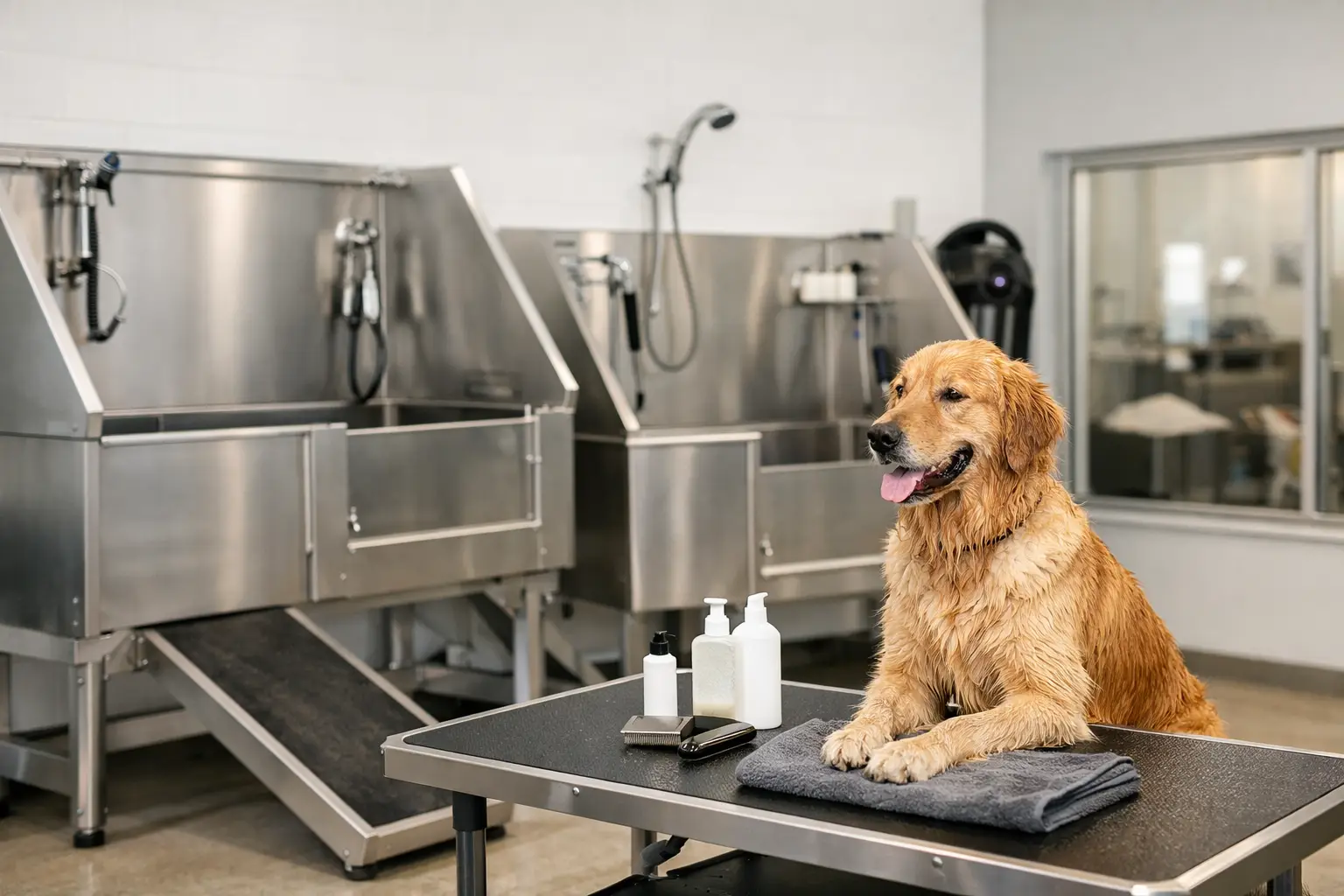
A dog wash should never feel like an afterthought tucked beside a utility sink. In a premium pet destination, commercial bathing equipment becomes part of the space’s signature: a visible expression of care, cleanliness, design, and operational confidence. The right self-service wash kiosk can give dog owners a practical reason to return while helping an operator create a more complete, polished destination.
For grooming salons, pet boutiques, residential developments, hospitality venues, and specialty retailers, the question is not simply whether to add a wash station. It is whether the equipment can support the standard the business wants to be known for.
Commercial Bathing Equipment Is Part of the Experience
Owners notice the details before they begin a wash. They notice whether the unit looks considered within the interior, whether the space feels orderly, and whether instructions are clear enough to make the process feel intuitive. A commercial installation should support a five-star impression from the first glance.
That does not mean every location needs the same setup. A design-forward retail concept may prioritize a compact footprint and visual harmony with the store. A high-traffic dog destination may place greater value on durable surfaces, straightforward customer flow, and a service area that staff can monitor comfortably. A residential or hospitality setting may need equipment that complements shared amenities rather than dominating them.
The strongest choice starts with the setting. Commercial bathing equipment should be selected as part of the customer journey, not treated as a standalone appliance.
Begin With the Location, Not the Machine
Before comparing kiosk models, assess where the wash experience will live. A unit that performs well in a dedicated pet facility may be unsuitable for a refined lobby-adjacent retail environment or a compact urban site.
Start with the practical realities: available floor space, drainage access, water supply, electrical requirements, ventilation, wall clearances, and the route a dog owner will take through the space. These fundamentals shape both installation complexity and the finished experience.
Traffic patterns matter just as much. A wash kiosk near the entrance can create visibility and invite curiosity, but it can also introduce wet-floor concerns and congestion. A more private placement can feel elevated and composed, though it may require stronger wayfinding. There is no universal answer. The right arrangement depends on how customers enter, shop, wait, and exit.
Consider the area around the equipment as carefully as the equipment itself. Owners need enough room to arrive with a dog, manage a leash, set down belongings, and leave without crossing paths awkwardly with other guests. Staff need clear sightlines and reasonable access for cleaning and routine checks.
Design Should Support Confidence
Premium does not have to mean ornamental. It means purposeful. Clean lines, easy-to-read controls, considered finishes, and a thoughtfully organized surrounding area can make a functional service feel like a natural extension of the brand.
Avoid building the experience around visual novelty alone. An impressive kiosk loses its appeal if instructions are confusing, surrounding surfaces are difficult to maintain, or the area feels cramped. The best commercial bathing environment looks calm because the operational details have already been solved.
What Operators Should Verify Before Purchasing
Technical specifications should come directly from the manufacturer or authorized distributor. This is especially important when evaluating an automated self-service dog wash kiosk, where local requirements and site conditions can affect the final configuration.
Ask for current documentation covering water and electrical needs, drainage requirements, dimensions, weight, installation guidance, warranty terms, service availability, and cleaning procedures. If a supplier describes water consumption, energy use, wash-cycle duration, filtration, drying functions, or safety systems, request the exact specifications in writing rather than relying on broad claims.
Safety deserves particular attention. Operators should understand how the unit is designed to support secure use, what emergency or stop controls are included, how temperature settings are managed, and what guidance is provided for customers and staff. The business also needs a clear policy for supervision, cleaning, incident response, and appropriate use.
Maintenance should be assessed with the same discipline. Every commercial system requires care. The relevant question is whether the operator understands the cleaning schedule, consumable needs, inspection points, potential service intervals, and process for obtaining technical support. A premium customer experience depends on consistency, and consistency depends on an operation that is prepared.
Build a Service, Not Just an Amenity
A self-service wash kiosk can be an amenity. It becomes a true service when its role is clear within the business.
For a boutique, the wash may complement a curated collection of leashes, travel accessories, wellness essentials, and seasonal fashion. For a grooming destination, it may offer a convenient option between appointments. For a mixed-use property or hospitality concept, it may make life with a dog feel better considered for residents and guests.
Each model calls for a different approach to staffing, messaging, and space. A fully attended environment can offer a more guided introduction. A self-directed setup needs especially strong signage, simple operating instructions, and visible standards of cleanliness. Neither is inherently superior. It depends on the audience, the team, and the pace of the location.
The experience should also have a natural beginning and end. Clear arrival instructions, an organized washing area, accessible drying or finishing space where applicable, and a visible place for towels or waste disposal all shape how guests remember the visit. Small frictions become large impressions when someone is managing a wet dog.
The Commercial Case Requires Honest Assumptions
A kiosk should be evaluated through realistic operating assumptions, not generic revenue promises. Demand will differ by neighborhood, customer profile, nearby services, opening hours, pricing structure, and how well the experience is integrated into the broader business.
Map the full picture before committing. Include acquisition and installation costs, site preparation, utilities, cleaning labor, maintenance, payment processing where relevant, supplies, insurance considerations, and staff training. Then consider how the wash service may influence repeat visits, loyalty, related purchases, and the overall appeal of the destination.
This is where brand positioning matters. A premium operator may decide that the wash service is not meant to maximize transactions in isolation. Its value may be in making the location more memorable, more useful, and more aligned with the expectations of discerning dog owners. Another operator may prioritize high utilization and a more standardized format. Both approaches can work when the numbers and service model match.
Plan for the First 90 Days
The launch period reveals what a proposal on paper cannot. Monitor how guests move through the wash area, which instructions create questions, when cleaning is needed most often, and whether the surrounding space supports the actual pace of use.
Train staff to explain the service in a concise, reassuring way. They should know the operating basics, the cleaning standard, and the process for escalating a technical issue. They should not need to improvise. A polished service feels effortless because the team has a clear playbook behind it.
It is also wise to establish a simple review rhythm with the supplier or distributor. Early feedback can identify installation adjustments, maintenance questions, or customer-experience improvements before they become recurring problems.
A Partnership Should Be Evaluated Beyond the Hardware
For B2B buyers, the equipment is only one part of the decision. The quality of the partnership matters after installation, when the operator needs documentation, training, replacement parts, service coordination, and straightforward communication.
Ask prospective partners how they support site planning, installation coordination, operator onboarding, and ongoing technical questions. Clarify who is responsible for each stage. If the equipment will be distributed or installed across multiple markets, confirm how the partnership will address local compliance, logistics, servicing, and language needs.
Doggo Paradiso will present its automated dog-wash kiosk technology at SuperZoo 2026, Booth 13-17, offering operators and distributors an opportunity to discuss the commercial context behind a premium self-service wash concept. The most useful conversations will begin with a location plan, not a vague request for a machine.
A well-chosen wash kiosk can add practical value to a dog-focused business, but its real impact comes from the standard around it. Choose commercial bathing equipment that fits the space, verify every technical claim, and design the surrounding experience with the same care you give the rest of the brand. Dogs may arrive for the wash, but their owners will remember how the place made them feel.