
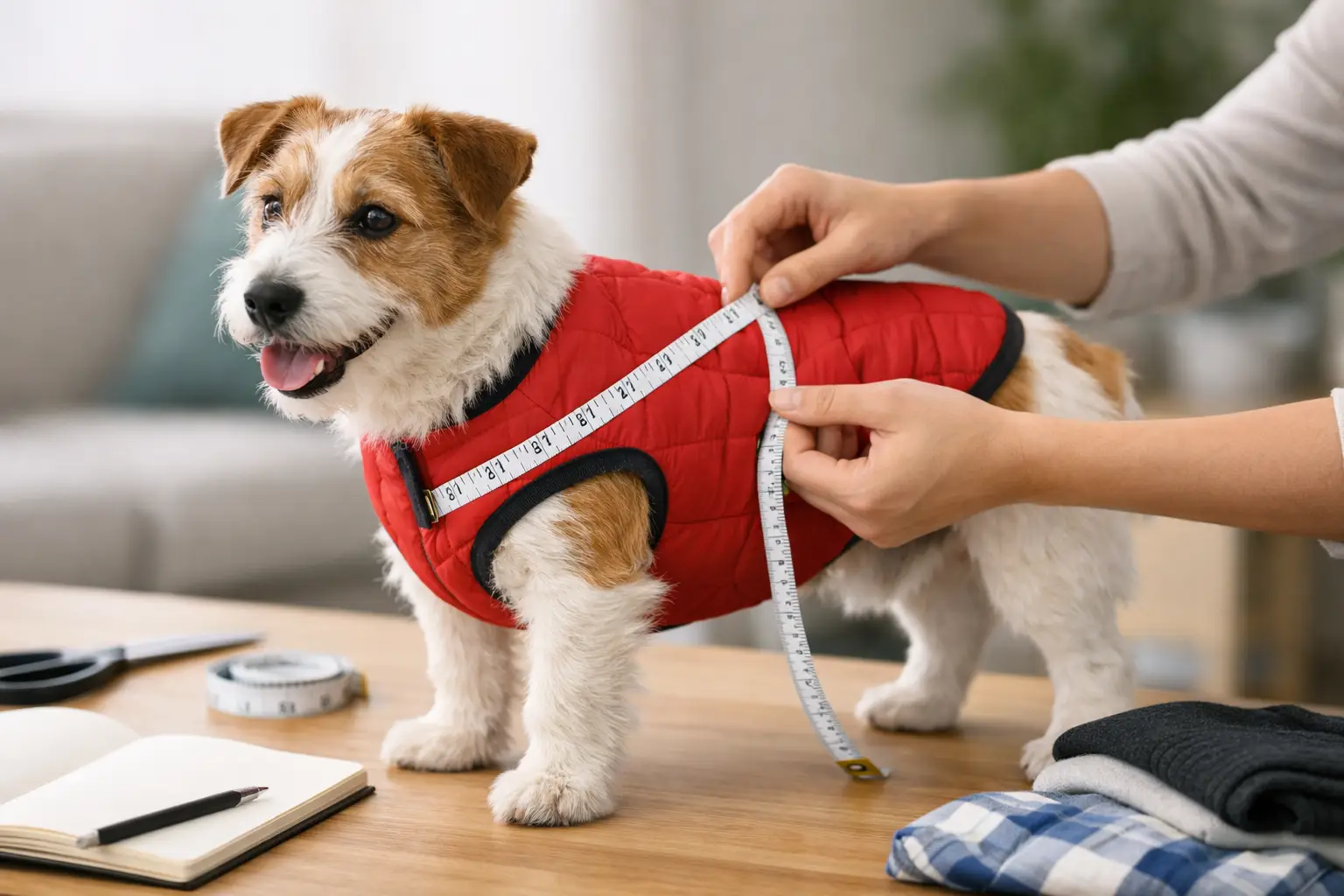
A beautifully cut dog coat should frame the body with ease, not pull at the chest or leave the neckline floating. The difference is rarely the garment. It is the measurement. Knowing how to measure dog apparel gives every piece, from refined denim to a polished cold-weather layer, the tailored presence it deserves.
Fit is also about comfort. A dog who can walk, sit, turn, and stretch naturally will wear a look with far more confidence. Before choosing a size, take a few quiet minutes to measure with intention. It is the closest thing to a fitting appointment at home.
How to Measure Dog Apparel at Home
Measure your dog while they are standing on all four paws on a level surface. A relaxed, natural stance creates the most reliable numbers. Measuring while your dog is sitting, lying down, or twisting to inspect the tape can shorten the back measurement and distort the chest.
Use a soft tailor's tape measure rather than a rigid ruler. If you do not have one, wrap a piece of string around the body, mark where it meets, then lay it flat beside a standard tape measure. Keep the tape close to the coat without drawing it tight. You are measuring the body, not compressing it.
For the best result, take each measurement twice. If the numbers differ, use the larger one. This small precaution is especially useful for dogs with a thick coat, a broad chest, or an athletic build that shifts slightly between poses.
Start with the neck
Measure around the base of the neck, where a collar would sit comfortably. This is lower than the throat and usually just ahead of the shoulders. A collar measurement can be a useful reference, but it is not always exact. Many collars are worn looser than a structured garment is designed to fit.
The neckline should feel refined but never restrictive. You should be able to slide two fingers between the garment and your dog's neck once it is fastened. For high-neck knits, raincoats, and tailored jackets, this measurement matters more than many owners expect. A neck opening that is too narrow makes dressing unnecessarily difficult, while one that is too wide can interrupt the clean line of the piece.
Find the fullest part of the chest
Next, measure the chest girth. Wrap the tape around the widest part of the ribcage, typically just behind the front legs. This is often the most decisive measurement when selecting dog apparel, because it determines how comfortably a garment can move with the body.
Keep the tape level as it circles the chest. If it slips backward toward the abdomen or angles up over the shoulders, the result may be too small. For dogs with a deep chest, prominent shoulders, or a fuller coat, take this measurement slowly and without guessing.
If your dog falls between two sizes, chest girth usually deserves priority for fitted outerwear and structured pieces. A slightly longer back can still look intentional. A chest that pulls across the front legs cannot.
Measure the back length
Place the end of the tape at the base of the neck, where the collar rests, and run it straight along the spine to the base of the tail. Do not measure to the tip of the tail. Do not begin at the shoulder blades. These common shortcuts can add or subtract enough length to change the fit entirely.
Back length is especially meaningful for coats, dresses, and denim jackets designed to create a precise silhouette. A piece that ends too high can look undersized. One that extends beyond the tail base may shift while your dog walks, particularly on compact or active builds.
Some designs are intentionally cropped, while others are made to offer fuller coverage. This is where the product's stated proportions matter. A back measurement is a guide, not a reason to ignore the intended cut of a particular style.
Measure the Body Shape, Not Just the Numbers
Two dogs can share the same chest girth and back length while needing entirely different fits. The measurement chart is essential, but proportion finishes the picture.
A French Bulldog, for example, may have a compact back and powerful chest. A Greyhound may have a narrow waist, deep ribcage, and elongated frame. A miniature Dachshund needs careful back-length consideration, while a Poodle's coat may add visible volume that does not reflect the body beneath it. None of these shapes is difficult to dress. They simply benefit from a more considered choice.
Look at where your dog's shoulders sit, how sharply the chest narrows behind the front legs, and whether the waist is defined. Apparel with adjustable closures can offer more flexibility around the chest and midsection. Stretch fabrics can be forgiving, but they should not be used to compensate for a size that is fundamentally too small. Structure is part of luxury. A garment should hold its intended shape without asking the dog to squeeze into it.
For dogs with broad shoulders, check the front opening and armhole placement in addition to the chest measurement. A generous chest alone does not guarantee free movement if the design cuts too close around the legs. For long-backed dogs, prioritize styles that clearly state their back coverage and avoid assuming that a larger size will solve every proportion issue. Going up a size can create an oversized neckline or excess fabric around the chest.
How to Measure Dog Apparel by Style
The right measurement depends slightly on what your dog is wearing. A soft T-shirt has more give than a lined coat. A tailored harness vest needs a more exact chest fit than a relaxed sweater. Reading the garment category alongside the size chart makes the decision more intelligent.
For sweaters and jersey pieces, chest girth and neck comfort lead the decision. The fabric may stretch, but a close fit around the front legs can still limit movement. Choose enough ease for a full stride, especially if your dog enjoys long city walks or lively weekends outdoors.
For coats and jackets, give equal attention to chest girth and back length. These pieces often use less flexible materials, and their closures need to sit neatly across the body. A well-fitted jacket should lie flat through the back, close securely without pulling, and allow your dog to lower their head and walk without the collar area riding upward.
For dresses, occasionwear, and haute couture-inspired styles, begin with the chest, then assess the back length and waist placement. Decorative details should sit where they were designed to sit, rather than shifting toward the shoulders or tail. A more sculpted piece may require a closer match to the chart than an everyday knit.
For rainwear, consider what may sit underneath. If your dog commonly wears a light layer below a shell, measure over that layer or allow a modest amount of room. The goal is a composed silhouette with practical freedom, not unnecessary volume.
Read Size Charts with a Designer's Eye
A size label is not universal. A medium in one collection may be cut for a very different body shape than a medium in another. Always compare your dog's current measurements with the specific chart provided for the piece you are considering.
Pay attention to whether the chart lists body measurements or garment measurements. Body measurements indicate the dog the item is designed to fit. Garment measurements describe the finished piece itself and may include built-in ease. Treating those two systems as identical is one of the easiest ways to choose the wrong size.
When the chart gives a range, place your dog within it honestly. Do not select a smaller size for a more fitted appearance. Fine tailoring creates polish through proportion, not tightness. If the chest measurement sits at the upper end of a range, consider the next size when the fabric has little stretch or the design is structured.
Do a Final Fit Check
Once the apparel arrives, put it on when your dog is calm and unhurried. Fasten closures as designed, then watch how the piece sits before making any adjustments. The shoulder area should remain in place, the chest should not wrinkle or strain, and the neckline should stay comfortable when your dog looks down.
Ask your dog to take a few steps, sit, and turn. A quality fit allows each movement without the garment rotating around the torso, bunching under the front legs, or lifting sharply at the neckline. Check the underside as well. Fabric should not crowd the underarm area or interfere with natural movement.
The most elegant dog apparel never looks overworked. It follows the body, respects movement, and lets the design speak for itself. Take precise measurements, choose for proportion, and your dog's wardrobe will feel less like an accessory and more like a five-star fit made for their individual presence.