A self-service dog-wash kiosk is part grooming amenity, part public-facing equipment, and part plumbing installation. That combination shapes what kiosk maintenance is required. The visible wash bay must look immaculate, but the less visible work matters just as much: keeping water systems clean, drainage clear, payment hardware functional, and safety components ready for use.
For a premium location, maintenance is not an afterthought reserved for a service call. It is the operational standard that protects the customer experience, the equipment, and the presentation of the space. The exact schedule depends on the kiosk model, local water conditions, usage levels, and the manufacturer’s manual. Still, a disciplined routine gives operators a clear foundation.
What Kiosk Maintenance Is Required Each Day?
Daily attention should focus on hygiene, appearance, and early detection. A kiosk can be technically operational and still fall short of a five-star experience if the tub has residue, the floor is wet, or the dryer area looks neglected.
At opening and after periods of heavier use, staff should inspect the wash bay, tub, fixtures, hose, spray nozzle, dryer hose, door or access points, floor, and drainage area. Remove hair and visible debris before it reaches the drain. Clean and disinfect touchpoints according to the approved cleaning procedure and product instructions. Rinse surfaces thoroughly where required, since cleaning-product buildup can affect both appearance and use.
The floor deserves particular attention. Water, shampoo, and loose hair can create a slip risk and quickly undermine the polished feel of the installation. Check that drainage is flowing freely and that non-slip surfaces remain clean and intact. Any standing water, unusual odor, or slow drainage should be recorded and addressed promptly rather than left for the next scheduled visit.
A short functional test is equally valuable. Confirm that the display responds, the wash controls activate as intended, and the payment interface is available if the unit includes one. Look for leaks around fittings, unusual sounds from pumps or dryers, error messages, damaged cables, loose panels, or worn accessories. A small issue noticed early is usually easier to correct than a disruption discovered by a customer.
Cleanliness Is an Operating Standard, Not a Cosmetic Detail
A dog-wash kiosk sits at the intersection of wellness, design, and high-frequency public use. Its cleanliness communicates care before a customer touches a control. That is why operators should distinguish between a quick reset and a genuine sanitation routine.
A reset keeps the space presentable between users: remove hair, clear the tub, dry splash-prone surfaces, and check the floor. A deeper daily clean addresses the areas that can be missed during a busy period, including underneath removable grates, around drains, the exterior of dispensers, control panels, and the edges of the tub.
Use cleaning agents that are compatible with the kiosk’s materials and the manufacturer’s guidance. Harsh chemicals may damage finishes, seals, screens, labels, or dispensing components. Fragranced products can also leave a residue that is difficult to manage in an enclosed wash area. The aim is a clean, refined environment, not a heavily perfumed one.
For locations with high use, it may be appropriate to assign cleaning checks across the day rather than relying on one evening routine. This is not excessive. It is how a premium amenity remains credible at every hour it is available.
Water, Drainage, and Plumbing Need Planned Attention
The plumbing system is central to kiosk performance. Operators should routinely inspect visible supply lines, fittings, hoses, valves, and drain connections for leaks, corrosion, wear, or movement. Even a minor drip can affect finishes, flooring, and adjacent equipment over time.
Drainage maintenance should include regular removal of collected hair from screens, traps, or designated collection points, following the kiosk design and local plumbing requirements. Never force hair deeper into the system with excessive water pressure. If drains empty slowly, back up, or produce recurring odors, the right response is an inspection by a qualified plumbing professional. Repeated symptoms can point to a blockage, a venting issue, or a maintenance need beyond the kiosk itself.
Water quality also matters. Hard water can contribute to mineral buildup on nozzles, valves, fixtures, and internal components. In areas where mineral content is a concern, operators may need a treatment, filtration, or descaling plan specified by the equipment manufacturer. The correct interval is not universal. It should be based on local conditions, observed buildup, and the kiosk’s technical documentation.
If the site has a water-heating element or temperature-control system, check it only within the operator procedures provided for the unit. Do not adjust internal settings casually or bypass safety controls. Temperature inconsistencies, warning indicators, or repeated faults should be escalated to an authorized technician.
Consumables and Moving Parts Require More Than a Refill
Shampoo, conditioner, and other approved wash products may be central to the customer experience, but dispensers need supervision beyond keeping them full. Check levels, expiration or batch information where applicable, dispenser tubing, pump action, and signs of leakage or crystallized product. Keep refill areas clean so that the equipment looks considered from every angle.
The same principle applies to moving parts. Hoses, nozzles, clips, restraints where fitted, dryer hoses, handles, and access doors experience repeated handling. Inspect them for cracks, loose connections, sharp edges, fraying, or reduced performance. Replace worn parts with approved components rather than improvised alternatives that may not fit safely or preserve the intended design.
Filters are another common maintenance point, particularly where dryers, water systems, or ventilation components use them. Their service interval should follow the manufacturer’s specifications and the actual operating environment. A location with frequent use or more airborne hair and dust may require closer attention than a quieter site.
Safety Checks Should Be Routine
A premium dog-wash experience depends on calm, confident operation behind the scenes. Safety checks should be documented rather than treated as informal observations. At a minimum, staff should know how to identify and report damaged electrical elements, water leaks near electrical equipment, loose fixtures, blocked drains, faulty controls, or any signage that has become unreadable.
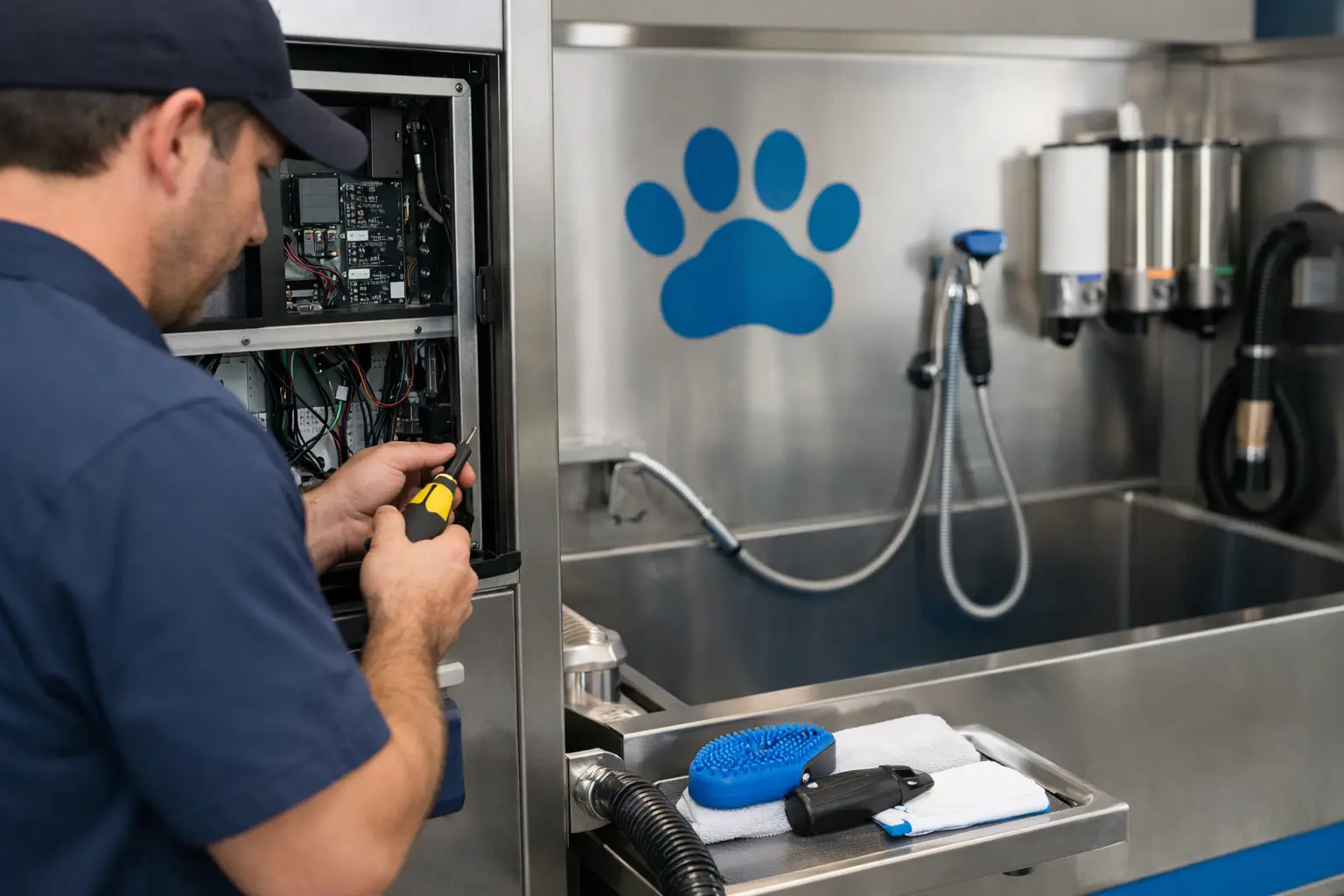
Electrical servicing belongs to qualified professionals. Staff can visually inspect power cords, enclosures, buttons, and screens for damage, but they should not open panels or attempt repairs unless they are trained and authorized to do so. If there is any sign of electrical fault, remove the kiosk from service according to the operator procedure and arrange professional assessment.
Emergency stop features, if fitted, should remain accessible and clearly marked. Safety labels, operating instructions, and contact information should be kept clean and legible. This is especially relevant in self-service environments, where a guest needs clear direction without having to search for assistance.
Accessibility, local building requirements, and sanitation rules also vary by jurisdiction. Before installation and throughout operation, operators should confirm the applicable requirements with qualified local professionals. A maintenance plan should support those obligations, not replace them.
Build a Maintenance Calendar That Fits the Location
The strongest approach is a layered calendar: daily visual and hygiene checks, weekly cleaning of less accessible areas, periodic inspection of consumables and components, and scheduled professional servicing. The manufacturer’s maintenance manual should set the baseline, while the site’s usage and water conditions determine whether more frequent checks are needed.
A simple maintenance log creates accountability. Record cleaning, refills, faults, repairs, filter changes, plumbing observations, and technician visits. Over time, that record reveals patterns. A recurring drainage concern, dispenser issue, or control fault becomes easier to address when there is a clear history rather than a collection of verbal reports.
For B2B operators evaluating an installation, maintenance planning should be part of the location decision from the beginning. Consider access to water and drainage, the availability of trained staff, storage for approved supplies, cleaning time, service access, and the visual standard expected by the venue. Doggo Paradiso approaches the dog-wash kiosk as a design-led service point, which makes operational discipline as relevant as the surrounding retail environment.
The best-maintained kiosk does not call attention to its maintenance. It simply feels clean, considered, and ready when a dog owner arrives. That quiet consistency is what turns a practical amenity into an experience people trust and choose again.